




07 Oct 2026
Connected Vehicles Explained: Skills Required to Work in Telematics & IoT
More Links




In the connected world that we live in, global shifts impact us both positively and adversely depending on how equipped we are to face them. The Indian economy is constantly being reshaped by the interplay of megatrends, particularly technological disruptions across sectors, forcing the workplaces and nature of work to change, as well, in the process. Its widespread impact on business and future workforce has been a push to re-think the current status of the entire skill ecosystem, to cater to the evolving growth story and demands of Industry 4.0. The skilling ecosystem is in dire need of strength boost, that can be achieved by not just imparting relevant training to the new entrants in the work force, but equipping the existing workforce with requisite skill sets to manage technology disruptions in whichever occupation they choose, or better, innovate.
Taking the fast-evolving economy and changing nature of work in account, experts forecast a shift in the skills and competencies required for future jobs. Further, skills tailored to the needs of industry-specific emerging technologies will be of utmost importance, since technology advancements are expected to have different effects on different industries. A number of field research conducted in this regard has come up with the following list of new-age skills that are in high demand for jobs in the coming times:
Technical Skills- Highly prioritized for any job in the manufacturing and service sectors, these core skills are basically abilities or knowledge to carry out specific tasks. These practical set of skills can be measured and evaluated in different ways, and takes the right training and experience to be mastered. Depending on the type of job, technical skills can be of different types, and hence these are also often referred to as job-specific skills.
Relationship Building and Collaboration- Important for establishing and maintaining productive and positive working relationships, this particular skill set is all about teamwork, communication and client-servicing. This skill involves the ability to work with people from dynamic backgrounds, awareness of their strengths and weaknesses, and strong communication skills. Moreover, this skill set is high on demand for the purpose of leaving a positive impact on end clients, and anticipating their future needs.
Management and Leadership Skills- Required for people management and negotiation, it is a must-have set of skills to achieve organizational goals. It is mostly needed among managers and team leaders to carry out their leadership duties of managing and motivating their team members, and responding to their needs, in order to maximize productivity. This is also essential for career growth, as the ability to negotiate with team members, clients and managers helps a lot in successfully climbing up the career ladder.
Emotional Intelligence and Empathy- It is a rather intangible skill that involves individuals monitoring feelings of their own and of other’ as well. It requires an individual to tune into the gamut of human emotions, correctly distinguishing between emotions and thus guiding one’s thinking and actions. It further measures a person’s ability to adapt and adjust his or her behavior based on the mood of the colleague, or even his or her own feelings. Empathy refers to awareness of others’ feelings, needs and concerns.
Critical Thinking- It is the ability to logically process and produce usable results. It involves use of logic and reasoning to investigate an issue or problem, think about various solutions to the problem, and weigh up the pros and cons of various approaches to arrive at a solution. It entails effective problem-solving skills along with self-corrective thinking to arrive at a judgment.
Cognitive flexibility and creativity- Cognitive flexibility is the mental ability of an individual to be able to switch between thinking about two different concepts, and at the same time think about multiple concepts. Creativity, on the other hand, is expected to become a key desired skill in the future. It is about one’s ability to connect the dots with seemingly disparate information, and throw all the ideas together to present something new.
Going forward, almost every industry will be chasing after these skills in the applicants, however based on the type of industry and job family, the degree of demand for these skills will vary. These new skill sets adds value to the required skills that are considered important in the existing scenario, and hence should be viewed as a bonus to ensure career progression and longevity. This combination will enable an individual to work in different occupation settings and conditions, and will go a long way in sustaining the employability of Indian youth.

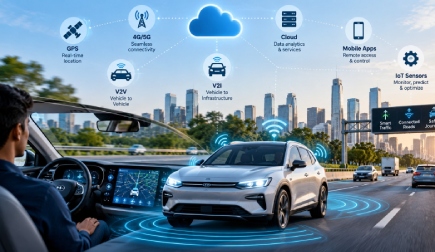
Connected Vehicles Explained: Skills Required to Work in Telematics & IoT
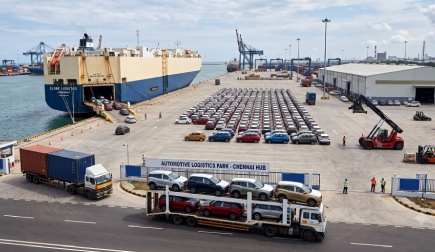
Automotive Logistics & Supply Chain: Skills Driving the Next Phase of Mobility
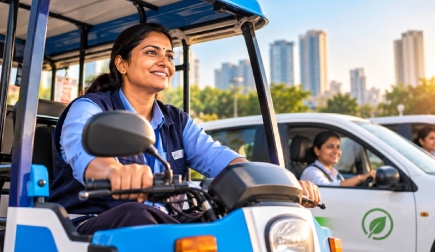
Growing Force of Women in E-Rickshaw and Fleet Services
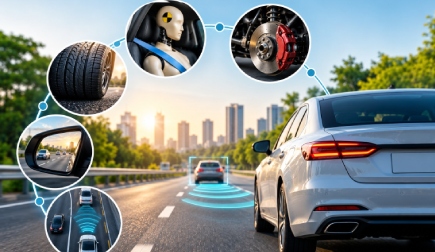
Road Safety Starts with Science: What Every Indian Driver Should Know
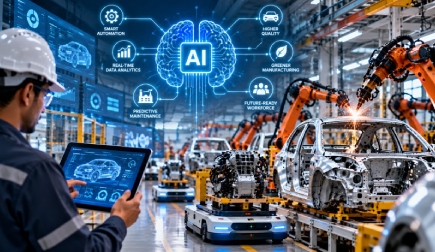
AI in Automotive: How Smart Factories Are Changing Production Lines
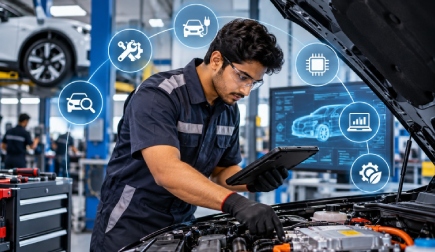
Skills Needed for Modern Auto Service Technicians
The modern automobile is no longer just a machine that takes people from one place to another. It is increasingly becoming a connected...
A car may be assembled in one factory, but its journey begins much earlier. Thousands of components can come from different suppliers, cities and countries before they reach the production line.
India's mobility sector is witnessing a quiet but powerful transformation. Women are increasingly taking the driver's seat in e-rickshaws...
Every journey on India's roads involves thousands of decisions made in a matter of seconds
The automotive manufacturing floor is undergoing a fundamental shift. For decades, production efficiency...
The role of an auto service technician in India is changing rapidly. A technician who once spent most of the day working on engines...
