




07 Oct 2026
Connected Vehicles Explained: Skills Required to Work in Telematics & IoT
More Links





India's electric vehicle revolution is accelerating at an unprecedented pace, with EV sales reaching 17.3 lakh units in 2023-24 and projected to cross 25-30 lakh units in 2025. As the nation moves toward its ambitious target of 30% EV adoption by 2030, a critical challenge emerges: ensuring the functional safety of increasingly complex electric vehicle systems. This surge in EV adoption has created substantial opportunities for Automotive Functional Safety Engineers who specialize in implementing ISO 26262 standards for electric vehicles.
Understanding Functional Safety in the EV Context
Functional safety in electric vehicles goes beyond traditional automotive safety paradigms. While conventional vehicles primarily focus on mechanical and basic electrical safety, EVs introduce high-voltage systems, sophisticated battery management, and complex power electronics that demand specialized safety engineering. ISO 26262, the international standard for road vehicle functional safety, provides the framework for managing these risks throughout the vehicle development lifecycle.
The standard defines Automotive Safety Integrity Levels (ASIL) ranging from A (lowest risk) to D (highest risk). In EVs, battery management systems (BMS) typically require ASIL C classification, while electric motor drives and high-voltage systems often demand ASIL D compliance - the most stringent safety requirements.
What Exactly is Functional Safety?
In simple terms, functional safety is about ensuring that all electronic and electrical systems in a vehicle operate correctly and safely, without causing harm. It’s not about crumple zones or airbags (which are physical safety); it’s about preventing system failures that could lead to hazardous situations. For an EV, this means ensuring that:
Key Responsibilities of EV Functional Safety Engineers
Automotive Functional Safety Engineers working on electric vehicles in India shoulder critical responsibilities that directly impact vehicle safety and regulatory compliance:
Skill Requirements for Success
The evolving EV landscape demands a unique combination of traditional automotive safety knowledge and electric vehicle-specific expertise:
Recognizing the skill gap, organizations like the Automotive Skills Development Council (ASDC) have partnered with institutions to develop EV-specific safety training programs. ASDC offers NSQF-certified courses in EV fundamentals, addressing the growing need for skilled professionals.

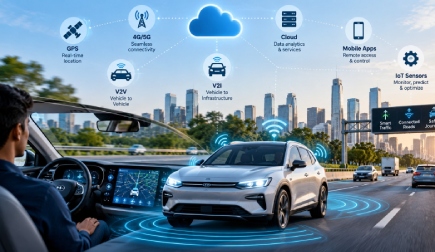
Connected Vehicles Explained: Skills Required to Work in Telematics & IoT

Automotive Logistics & Supply Chain: Skills Driving the Next Phase of Mobility
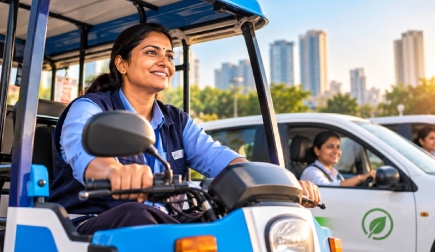
Growing Force of Women in E-Rickshaw and Fleet Services
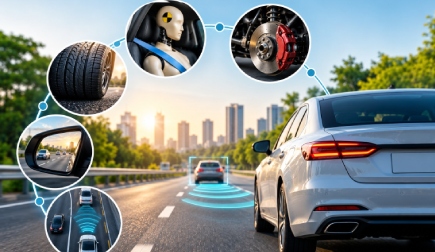
Road Safety Starts with Science: What Every Indian Driver Should Know
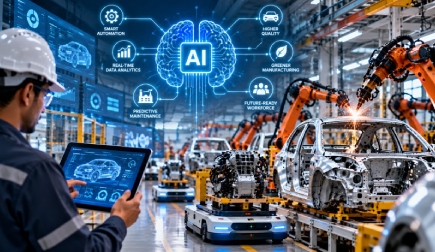
AI in Automotive: How Smart Factories Are Changing Production Lines
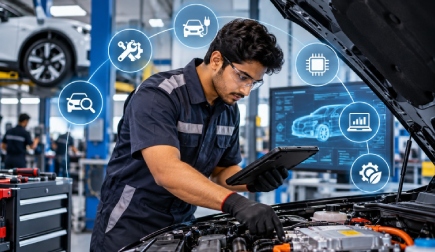
Skills Needed for Modern Auto Service Technicians
The modern automobile is no longer just a machine that takes people from one place to another. It is increasingly becoming a connected...
A car may be assembled in one factory, but its journey begins much earlier. Thousands of components can come from different suppliers, cities and countries before they reach the production line.
India's mobility sector is witnessing a quiet but powerful transformation. Women are increasingly taking the driver's seat in e-rickshaws...
Every journey on India's roads involves thousands of decisions made in a matter of seconds
The automotive manufacturing floor is undergoing a fundamental shift. For decades, production efficiency...
The role of an auto service technician in India is changing rapidly. A technician who once spent most of the day working on engines...
