




07 Oct 2026
Connected Vehicles Explained: Skills Required to Work in Telematics & IoT
More Links





India’s automotive industry is entering a transformative phase driven by electric mobility, automation, digitalization, and sustainability imperatives. While these shifts present enormous opportunities, they also highlight one of the sector’s biggest challenges — the widening industry-skill gap. The Automotive Skills Development Council (ASDC) has emerged as the key bridge connecting industry needs with workforce capabilities, ensuring that India’s mobility sector remains competitive, inclusive, and future-ready.
Aligning Skills with Industry Transformation
The Indian automotive sector contributes over 7% to the country’s GDP and employs more than 37 million people. However, with rapid technological changes, such as EVs, connected vehicles, and advanced manufacturing, traditional skill sets are becoming obsolete. ASDC addresses this by aligning training programs with current and emerging industry needs. Its curriculum focuses on future-centric areas like electric mobility, digital diagnostics, automation, and sustainability, ensuring that training outcomes translate directly into employability.
Through government-funded initiatives like PMKVY 4.0, SANKALP, and PMKUVA, ASDC has trained and certified thousands across India. These programs not only prepare candidates for existing job roles but also anticipate the skills required for upcoming technologies. For instance, under the PMKVY RPL program, over 11,000 informal workers were formally recognized and certified, a step toward dignifying informal labor and integrating them into formal industry structures.
Industry-Led Skilling: A Partnership Model That Works
What sets ASDC apart is its deep collaboration with industry leaders. With active participation from automotive giants such as Mahindra & Mahindra, Toyota, Bajaj Auto, Bosch, and Bridgestone, ASDC has created sustainable skilling ecosystems within industrial premises. These Industry-Led Training Centers act as hubs for both entry-level and mid-career workers, combining classroom instruction with on-the-job experience.
Projects like Bosch-ASDC Livelihood Initiative and Bridgestone’s Sarthi Program exemplify this model. They not only upskill technicians and drivers but also promote inclusivity by training women in traditionally male-dominated roles. Similarly, the Bohler Spark Scholars and Project VEEDOL Karigari initiatives train youth and grassroots mechanics in advanced welding and BS-VI technologies, ensuring the workforce remains relevant in a changing regulatory environment.
Empowering Through Certification and Quality Assessment
A major stride in bridging the skill gap is ASDC’s Assessment and Certification framework. In FY 2024-25 alone, over 1.76 lakh assessments were conducted across India. These certifications are recognized by NCVET and trusted by employers, offering job-ready credentials for learners. Collaborations with academic institutions like Symbiosis Institute of Technology and PES University under the Bajaj BEST Program exemplify how ASDC integrates academic learning with real-world industry standards.
By ensuring assessments are practical, transparent, and industry-reviewed, ASDC creates a benchmark of credibility, transforming certificates into true indicators of competence.
Driving Inclusivity and Livelihood Opportunities
ASDC’s work goes beyond skill training; it’s about creating livelihood pathways and empowering communities. Through targeted programs like Shakti–Sankalp in Bihar, thousands of women have been trained as E-rickshaw drivers, opening doors to financial independence. In West Bengal and Himachal Pradesh, ASDC’s state partnerships have equipped marginalized youth with EV servicing and sales skills, fostering inclusion and economic growth.
Additionally, through mobile training units and vernacular content, ASDC ensures that Tier 2 and Tier 3 cities have equitable access to future-ready education, eliminating geographical barriers to opportunity.
Building the Workforce of Tomorrow
ASDC’s strength lies in its ecosystem approach, connecting government, industry, academia, and society. Its upskilling and certification programs, CSR partnerships, and apprenticeship models collectively ensure that skill development is not a one-time activity but a continuous process. By fostering innovation, encouraging women’s participation, and integrating sustainability, ASDC is redefining what skilling means for the 21st century.
As India accelerates toward becoming a global automotive hub, the role of ASDC becomes ever more critical. It is not merely filling jobs; it is shaping the future of mobility, one skilled professional at a time. By bridging the gap between industry expectations and workforce capabilities, ASDC is driving India’s transformation toward a smarter, greener, and more inclusive automotive future.

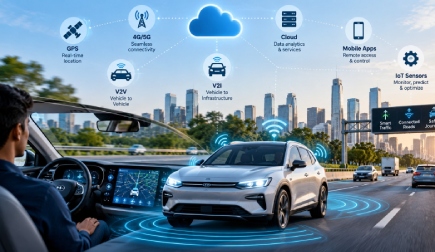
Connected Vehicles Explained: Skills Required to Work in Telematics & IoT
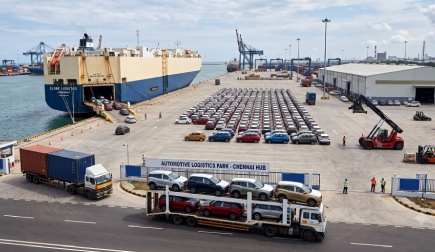
Automotive Logistics & Supply Chain: Skills Driving the Next Phase of Mobility
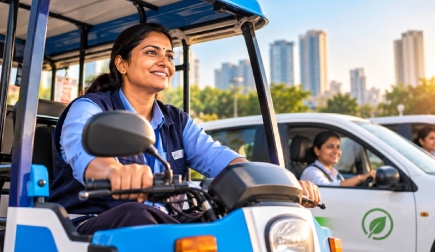
Growing Force of Women in E-Rickshaw and Fleet Services
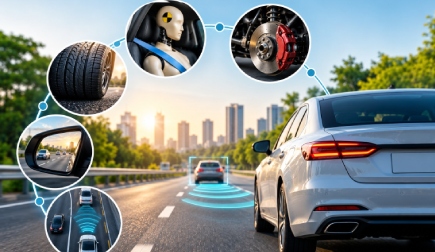
Road Safety Starts with Science: What Every Indian Driver Should Know
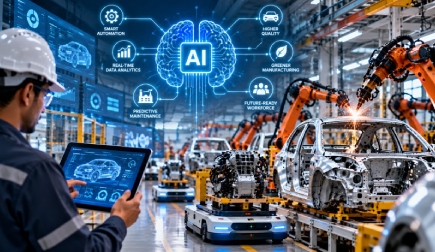
AI in Automotive: How Smart Factories Are Changing Production Lines
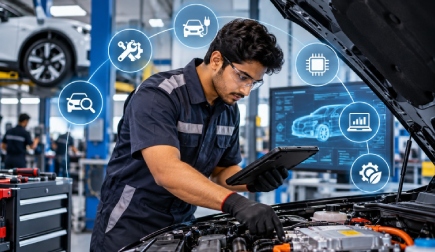
Skills Needed for Modern Auto Service Technicians
The modern automobile is no longer just a machine that takes people from one place to another. It is increasingly becoming a connected...
A car may be assembled in one factory, but its journey begins much earlier. Thousands of components can come from different suppliers, cities and countries before they reach the production line.
India's mobility sector is witnessing a quiet but powerful transformation. Women are increasingly taking the driver's seat in e-rickshaws...
Every journey on India's roads involves thousands of decisions made in a matter of seconds
The automotive manufacturing floor is undergoing a fundamental shift. For decades, production efficiency...
The role of an auto service technician in India is changing rapidly. A technician who once spent most of the day working on engines...
