




07 Oct 2026
Connected Vehicles Explained: Skills Required to Work in Telematics & IoT
More Links





The world’s automotive industry has been existing as an arena where the industrial and tech sectors have been churning out numerous breakthrough innovations for the last ten years, fanning the industry’s gradual growth. The automotive industry is, indeed, proceeding towards a stage where users will be able to enjoy innovative driving solutions, allowing manufacturers to generate better profits. However, the pandemic of 2020 acted as a major setback for the industry, and it is only towards the end of last year, as the markets were gradually rebounding, the sector finally experienced a renewed surge of hope within.
Along with rapid digitization, and the new normal in the post-Covid world, the sector is gearing up for an enormous change in 2021, aided by technologies such as Artificial Intelligence (AI) and big data and analytics. The change in the sector is being further boosted by newer technologies like Internet of Things (IOT) and block-chain.
Let us check some of the latest tech trends that are going to dominate the automotive industry in 2021.
If there is one thing that the automotive industry is working so relentlessly to make easily available in the market for so many years, it has to be AI-based autonomous vehicle. Self-driving cars have recently gained massive traction owing to the impeccable smart travel methods enabled by Artificial Intelligence; these vehicles provide a ‘driverless’ journey based on sensors and software for navigation and control. Primarily aimed at reducing human labor, these vehicles makes commuting easier and smoother. According to studies, there exists around 1,400 self-driving cars in the US as of today. The numbers are definitely not so big, as of yet, however, the fear in people’s minds regarding autonomous cars is gradually seem to be subsiding, leading more trust to get through. Tesla, Google, Uber and other big players are doing their best in pioneering, as well as, pushing the limits of AI based autonomous cars to promote its reliability to the consumers. Although, the outcome was temporarily put on hold during the Covid-19 pandemic in 2020, for an outrageously promising industry that is estimated to be of worth US$556 million by 2026, the road ahead seems pretty clear, especially keeping in view the rapid technological advancements on the roll.
The pandemic last year opened a new arena for online sale, of products in general and automobiles in specific. The lockdown protocols had totally changed the old age tradition of visiting an automobile dealership store and test driving, bringing the process to the online medium. The change was not accepted with open hearts by all but a considerable section of consumers was comfortable with the same. One of the foremost pros of the online medium is that buyers are able to compare different models and brands and not fall prey to the dealer’s persuasion. The dealerships too have not fallen behind in this regard; they have come up with various lucrative online tools such as virtual tours, secured checkouts, online financial options and return policies among others. Studies reveal that, as of now, 81% consumers are not comfortable with the new online transaction; however, the same is expected to change towards the positive in 2021.
Both abrupt and gradual rise in fuel prices across the globe has compelled the automobile industry to look for alternative power and energy source, electricity being one of the most prominent among them. With 15% of carbon emission contributed by cars and fossil fuel being depleted, electric vehicles (EVs) have become a game changer in the present day scenario. It was expected that by 2024, the US roads would be home to 1.4 million electric vehicles. Surpassing all expectations, in August 2020, the same number rose to 1.6 million. However, major cons of electric vehicles include its high price and inadequate charging infrastructure. The industry also needs to come up with solutions to issues such as poor battery, fleet electrification and energy based charging grids.
The internet’s second generation marvel – Block-chain – today has enabled numerous operations viz. sharing of information about vehicle(s) over a secure network, shared mobility solutions such as urban transport, ride-hailing and logistics among others. Block-chain is also a utility tool in back-office works. The same utility value can be used in management and incentives in order to improve vehicle information and usage data in the industry. Block-chain’s interference in the industry is expected to witness exponential growth in the upcoming year.
Newness is the notion of any industry and its products, the same goes in case of the automobile industry with never ending demands for new vehicles, upgrades of previous models and spare parts. The insistence for newer and better vehicles as well as the need to optimize production and streamline supply chains and logistics is also on the rise. One technology that has been acting as an aid to overcome these challenges is – 3D Printing. Today, this technology is being incorporated in all spheres of automotive production. Not only prototyping, 3D printing is used to produce numerous tools and end parts.

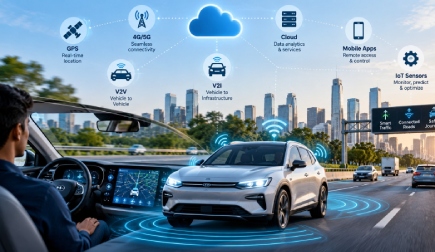
Connected Vehicles Explained: Skills Required to Work in Telematics & IoT
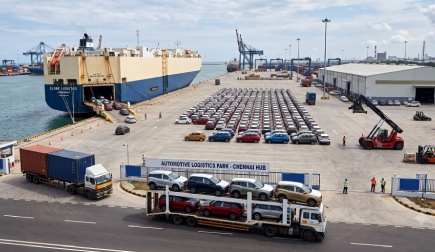
Automotive Logistics & Supply Chain: Skills Driving the Next Phase of Mobility
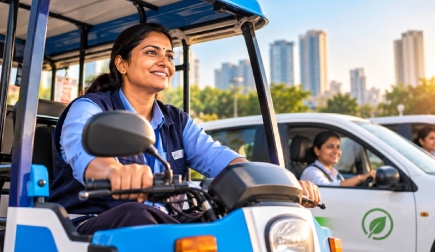
Growing Force of Women in E-Rickshaw and Fleet Services
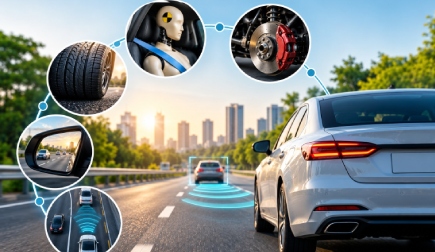
Road Safety Starts with Science: What Every Indian Driver Should Know
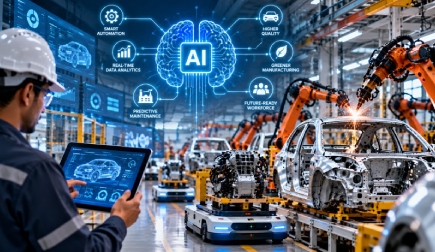
AI in Automotive: How Smart Factories Are Changing Production Lines
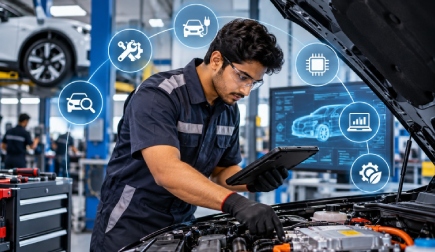
Skills Needed for Modern Auto Service Technicians
The modern automobile is no longer just a machine that takes people from one place to another. It is increasingly becoming a connected...
A car may be assembled in one factory, but its journey begins much earlier. Thousands of components can come from different suppliers, cities and countries before they reach the production line.
India's mobility sector is witnessing a quiet but powerful transformation. Women are increasingly taking the driver's seat in e-rickshaws...
Every journey on India's roads involves thousands of decisions made in a matter of seconds
The automotive manufacturing floor is undergoing a fundamental shift. For decades, production efficiency...
The role of an auto service technician in India is changing rapidly. A technician who once spent most of the day working on engines...
