




07 Oct 2026
Connected Vehicles Explained: Skills Required to Work in Telematics & IoT
More Links




The growing digital trend promises rapid enhancement of productivity, and new jobs. As per a report by McKinsey, by 2030, there will be around 20 million to 50 million jobs created globally, as a result of the ongoing digital revolution. However, with the creation of new jobs, there will be an array of existing jobs that will become obsolete. But the good news is, as soon as automation takes over more operational and repetitive tasks, there will be a fresh requirement for advanced skillsets to perform skill-intensive jobs of the future, involving emerging technologies like Artificial Intelligence (AI), machine learning (ML), Internet of Things (IOT) and data science. This is cue for the existing workforce to get retrained in higher cognitive, creative, collaborative, communication, and problem solving skills, to get redeployed to the jobs of the future without any hitch.
In terms of the automotive industry, industry giants are going all out investing to bring fluidity among their professional and managerial staff to cope with the emerging digital trend. Automakers from Audi to General Motors are pledging big sums to aid the retraining of workers for digital, as well as, to hire professionals fluent in robotics and app development.
This transformation, we talk of, is nothing like the tech transformations in the auto industry from the past, which was basically focused on improving front-line operations. This digital revolution is more about pushing the companies to level up, by upgrading their existing human resources to efficiently carry out digital tasks, instead of just bringing in robots to replace the line workers.
Let us check a few ways in which organizations can prepare a digitally savvy workforce to satiate their future digital needs:
Firstly, in order to scale rounded results and achieve the ultimate goal of digital transformation, companies should do an internal check-up for skill gap, and start with enhancing the capabilities of their current resources. Reskilling and up-skilling are must at this point, but it should not be limited to just the new employees, and should be extended for the mid-level employees and the c-suite, as well. Many global organizations in this field are already encouraging the idea by creating the culture of advanced learning and development within the organization to enable the employees at all levels to climb up the learning curve and fill the existing skill gap.
Training programs have to be more scalable, personalized, and flexible to adjust to the dynamic needs of the massive digital revolution. However, considering the revolution is still at a nascent stage, many companies may not be able to predict the exact industry-specific and occupation-specific competencies that they will be needing few years down the road. The issue is further complemented by the lagging pace of industry growth due to traditional education curricula and testing methods, which has been making it imperative for the industry to collaborate with professional skill training institutions.
One of the currently popular ways among various global organization to address unemployment and skill gap is through professional learning programs and apprenticeships. In India, the Automotive Skill Development Council (ASDC) has been a key establishment for the India Auto Inc. that has been supporting the industry by continuously developing data-driven solutions to the existing skills challenges.
Apart from offering massive training programs aimed to reskill and up-skill the auto workforce, ASDC provides an inventory of skilled manpower in the automotive sector, which includes candidates who have undergone skill training and assessments. Global forerunners of the industry are upbeat about actively identifying digital talent while they are still students, and nurturing them to perfection. By combining analytics, new technologies and the solid knowledge of the talent space, ASDC helps employers to shortlist the right candidates based on their skills, resulting in the formation of an agile workforce, well-equipped with versatile skills to deal with industry 4.0.
Despite digital transformation being the common goal of almost every organization, in most cases, due to lack of proper top-down communication, a majority of employees do not have a clear view of the organizations’ specific long-term and short-term plans of transformation. In fact, many organizations fail to spell out their digital goals and benchmarks, and the plans to achieve it, to their employees. This prevents the workers’ ability to completely involve and contribute towards the organizations’ efforts for transformation. Hence, organizations should make it a point for leadership to properly communicate the change story to their employees.
The peculiar thing about a transformation, as stated in a report by McKinsey is, “A transformation is 5.8 times more likely to be successful at organizations where CEOs communicate a compelling, high-level change story, and 6.3 times likelier when senior leaders share aligned messages about the change effort with the rest of the organization.â€
Digital transformation does not only have to do with adopting new technology. It is also about transforming people, and the ones who have realized this fact sooner are the ones successful. The human resources are at the core of any transformation in an organization, as they are the ones that drive agility, efficiency, and a learning-oriented culture. Therefore, it is imperative for the workforce to be equipped with the right skill sets in order to effectively drive digital transformation.

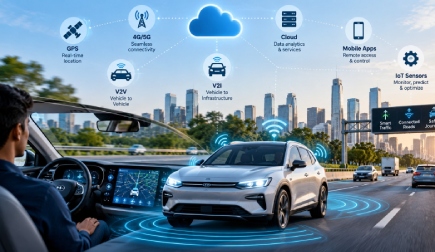
Connected Vehicles Explained: Skills Required to Work in Telematics & IoT
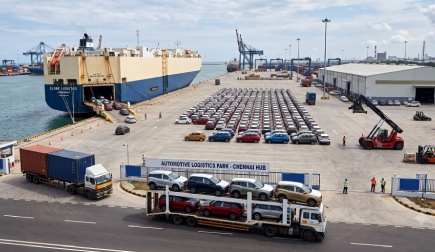
Automotive Logistics & Supply Chain: Skills Driving the Next Phase of Mobility
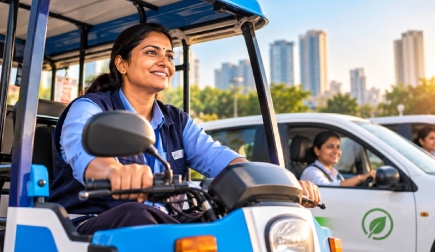
Growing Force of Women in E-Rickshaw and Fleet Services
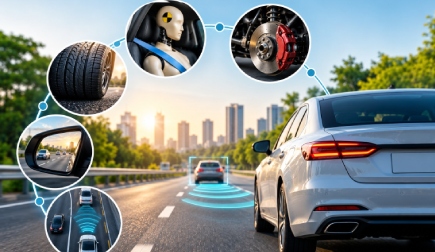
Road Safety Starts with Science: What Every Indian Driver Should Know
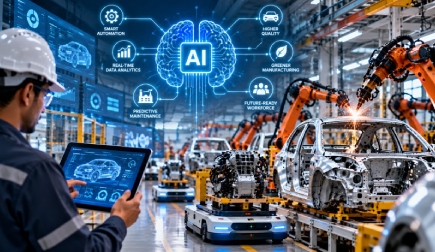
AI in Automotive: How Smart Factories Are Changing Production Lines
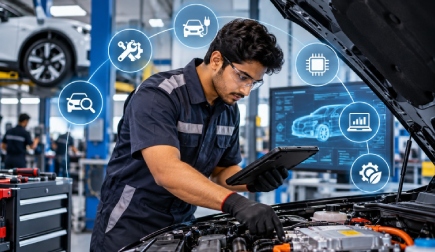
Skills Needed for Modern Auto Service Technicians
The modern automobile is no longer just a machine that takes people from one place to another. It is increasingly becoming a connected...
A car may be assembled in one factory, but its journey begins much earlier. Thousands of components can come from different suppliers, cities and countries before they reach the production line.
India's mobility sector is witnessing a quiet but powerful transformation. Women are increasingly taking the driver's seat in e-rickshaws...
Every journey on India's roads involves thousands of decisions made in a matter of seconds
The automotive manufacturing floor is undergoing a fundamental shift. For decades, production efficiency...
The role of an auto service technician in India is changing rapidly. A technician who once spent most of the day working on engines...
