




07 Oct 2026
Connected Vehicles Explained: Skills Required to Work in Telematics & IoT
More Links




Automotive industry is currently experiencing a historic transformation. With the market projected to reach $300 billion by 2026, the demand for high-precision manufacturing has never been higher. At the heart of this growth lies a critical yet often overlooked expertise: automotive welding careers in India.
As the sector shifts toward Electric Vehicles (EVs) and lightweight body structures, the role of the welder has evolved from a traditional manual trade into a high-tech engineering discipline. If you are looking for a stable, growth-oriented career, the world of fabrication offers a unique "bridge" between mechanical skill and modern technology.
The Rising Demand for Fabrication Jobs in Automotive Sector
India is now the world’s third-largest automobile market. This massive volume requires a robust supply chain of skilled professionals who can work with advanced materials like high-strength steel and aluminum alloys.
From the assembly of chassis and frames to the intricate fabrication of battery enclosures for EVs, fabrication jobs in the automotive sector are expanding rapidly. Industry 4.0 is also making its mark, with robotic welding and automated laser cutting becoming standard on shop floors. This means that today’s "welder" is often a technician who understands both the metallurgy of the joint and the programming of the machine.
India’s major automotive manufacturing clusters clearly reflect this rising demand for skilled welding and fabrication professionals. In Pune, which is home to OEMs like Tata Motors and Mahindra & Mahindra, fabrication teams are increasingly working with high-strength steel frames, robotic MIG welding cells, and precision jigs to meet global quality benchmarks. Tier-1 and Tier-2 suppliers in the Pune–Chakan belt are actively seeking technicians who can operate automated welding systems while maintaining strict dimensional accuracy.
Similarly, the Chennai automotive corridor has emerged as a hub for advanced body-in-white fabrication and export-oriented manufacturing. Welding professionals here are exposed to international safety standards, laser welding applications, and aluminium fabrication, especially for EV platforms and lightweight vehicle architectures. These clusters offer real-world exposure that goes far beyond textbook learning and highlight why industry-ready skills are now non-negotiable.
Career Pathways: From Trainee to Specialist
One of the best aspects of skilled trades in manufacturing is the clear, merit-based career progression.
Bridging the Gap with ASDC Training Programs
The biggest challenge facing the industry today is the "skill gap." While there is a high demand for workers, companies are specifically looking for professionals who understand global safety standards and precision techniques. This is where ASDC training programs play a pivotal role. As the primary skill development council for the sector, ASDC offers industry-aligned certifications that focus on:
Having an ASDC certification is often the "gold standard" that helps candidates stand out during the hiring process at major OEMs and component manufacturers.
The Future of Automotive Skills
The future of automotive skills is undeniably green and digital. As we look toward 2030, the focus will shift heavily toward battery fabrication and the use of eco-friendly joining technologies. Professionals who can adapt to these new technologies while maintaining the core principles of structural integrity will be the most sought-after in the market.
If you are a student or a mid-level technician, now is the time to upskill. The metal may be tough, but for those with the right skills, the career opportunities are limitless.

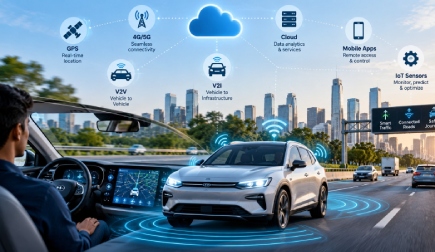
Connected Vehicles Explained: Skills Required to Work in Telematics & IoT
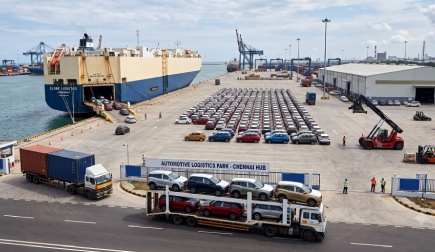
Automotive Logistics & Supply Chain: Skills Driving the Next Phase of Mobility
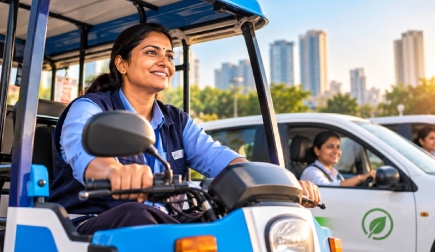
Growing Force of Women in E-Rickshaw and Fleet Services
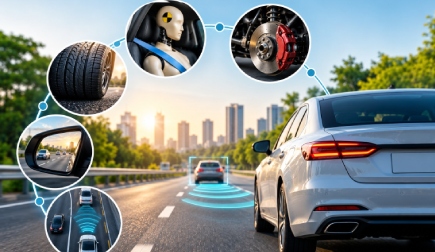
Road Safety Starts with Science: What Every Indian Driver Should Know
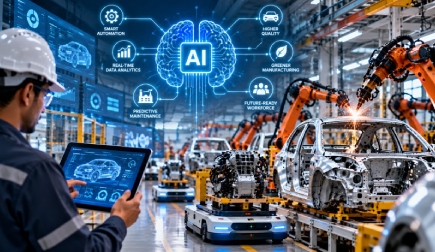
AI in Automotive: How Smart Factories Are Changing Production Lines
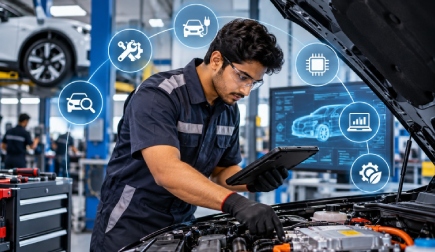
Skills Needed for Modern Auto Service Technicians
The modern automobile is no longer just a machine that takes people from one place to another. It is increasingly becoming a connected...
A car may be assembled in one factory, but its journey begins much earlier. Thousands of components can come from different suppliers, cities and countries before they reach the production line.
India's mobility sector is witnessing a quiet but powerful transformation. Women are increasingly taking the driver's seat in e-rickshaws...
Every journey on India's roads involves thousands of decisions made in a matter of seconds
The automotive manufacturing floor is undergoing a fundamental shift. For decades, production efficiency...
The role of an auto service technician in India is changing rapidly. A technician who once spent most of the day working on engines...
