




07 Oct 2026
Connected Vehicles Explained: Skills Required to Work in Telematics & IoT
More Links




For a country’s economic development, as well as, social growth, skills development plays a crucial part. Especially for a country like India, there is a constant requirement for higher employment opportunities to match its massive population, with millions of fresher entering the job market every year. While, by 2023, there will be an approximate 70 million fresh entrants between 15-59 years of age joining the labor force, India is, apparently, at an advantageous position with its unique demographic dividend, compared to its foreign counterparts including the USA, UK and Japan. And while for these countries, in the next 20 years, the labor force will decline by 4% in industrialized world, India will have a much younger labor force with an increase by 32 percent. This trend will continue for the next 50 years, and will provide us with immense opportunities to better shape the country’s future. However, to reap its benefits, India needs to equip its workforce with employable skills and knowledge so that they can contribute substantively to the economic growth of the country.
That said, the road to skilling the Indian workforce is not as smooth as it’s often perceived. Let us look into some of the major challenges to skill development in India, and how the country has been addressing them so far:
Creating possibilities for private sector engagement has been one of the crucial strategic pillar for skill development in India. The skilling landscape faces an acute gap in terms of sectoral need and availability, competency required by an employer and those possessed by a trainee, and so on. Basically, there is an issue of information asymmetry in multiple fronts. Recognition of Prior Learning or RPL is one promising way to counter the same.
Additionally, with Industry 4.0 gaining traction over years, training programs to up-skill and reskill the workforce of the future need to be more scalable, personalized, and flexible to adjust to the dynamic needs of the massive digital revolution. However, at this point, not many companies may be able to predict the exact industry-specific and occupation-specific competencies that they will be needing few years down the road. The issue is further complemented by the lagging pace of industry growth due to traditional education curricula and testing methods, which has been making it imperative for the industry to collaborate with professional skill training institutions.
In the recent years, professional learning programs and apprenticeships have become one of the highly popular ways among global companies to address the skill gap, as well as curb unemployment in the country. In India, the Automotive Skill Development Council (ASDC) has been a key establishment for the India Auto Inc. that has been supporting the industry by continuously developing data-driven solutions to the existing skills challenges. Apart from offering massive training programs aimed to reskill and up-skill the auto workforce, ASDC provides an inventory of skilled manpower in the automotive sector, which includes candidates who have undergone skill training and assessments.
India is firm at its stance on becoming the “Skill Capital†of the world, and the commitment is made evident through its structured efforts, including the India International Skill Centre (IISC) program. `For the purpose of counselling and guidance to the potential emigrants, with special focus on skills tests, upskilling, language and pre-departure orientation, a proposal for a new and market-driven IISC network has also been initiated. Under its Government-to-Government and B2B partnerships, the Government and India and Japan are cooperating to implement Japan’s Technical Intern Training Programme (TITP), an on-the-job training scheme providing three to five years of internship opportunities for foreign nationals in Japan. Furthermore, the government has undertaken technical collaborations with countries including the UK, Australia, and the UAE for benchmarking, and mutual recognition of standards.
In the Indian Auto sector, ASDC has joined hands with Magic Billion, a leading International Skill Centre under Skill India Program, in an attempt to further the PM’s vision of "Making India the Skill Capital of the Worldâ€. With all the new-age vehicles technologically more advanced, connected and smart, it calls for an entirely new set of skills and knowledge to drive the industry growth and its complete value-chain. The projects undertaken through this collaboration also demonstrates that ASDC, is creating career pathways for professionals in Automotive Sector, by initially training them on Indian Qualifications and then sending the best to global careers.
The next big challenge is the low rate of female participation in the labor force. According to various reports, out of the country’s labor force of 395.2 million, only 91.6 million are women. Apart from various skilling initiatives undertaken by the government to curb the gap, complemented by a wider push towards empowerment through gender sensitization, creation of economic opportunities and economic and social support, the focus should be on creating a gig economy, and provide flexible work models to attract more women. Given that a majority of women respondents report “attending domestic duties†as their reason, flexibility in the system might be helpful.
Gladly, the country’s progress so far, in terms of creating access to skill development for women has been fruitful, with currently, more than 50% of the total candidates trained under Pradhan Mantri Kaushal Vikas Yojana (PMKVY) being women. There is even a growing trend of women increasingly training and enrolling for unconventional job roles in automotive, electronics, and hardware sectors. The government is also encouraging partnership explorations with industries to support women-centric projects in non-traditional trades.
Surely, there are many challenges in the road to becoming the Skilling Capital of the world. However, the Indian government has exhibited massive determination and effort in fulfilling its long-standing goal. With coordinated efforts of government ministries and private organizations, the challenges of skill development in India can be tackled effectively, and in a holistic manner, to achieve its goal of global supremacy.

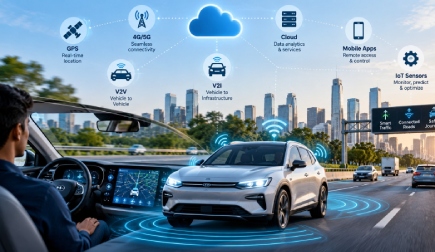
Connected Vehicles Explained: Skills Required to Work in Telematics & IoT
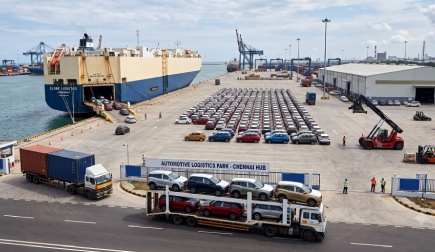
Automotive Logistics & Supply Chain: Skills Driving the Next Phase of Mobility
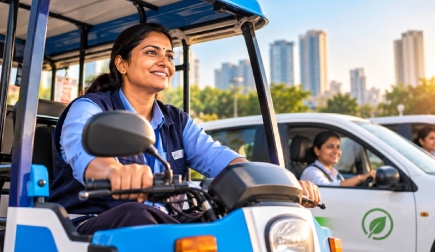
Growing Force of Women in E-Rickshaw and Fleet Services
Road Safety Starts with Science: What Every Indian Driver Should Know
AI in Automotive: How Smart Factories Are Changing Production Lines
Skills Needed for Modern Auto Service Technicians
The modern automobile is no longer just a machine that takes people from one place to another. It is increasingly becoming a connected...
A car may be assembled in one factory, but its journey begins much earlier. Thousands of components can come from different suppliers, cities and countries before they reach the production line.
India's mobility sector is witnessing a quiet but powerful transformation. Women are increasingly taking the driver's seat in e-rickshaws...
Every journey on India's roads involves thousands of decisions made in a matter of seconds
The automotive manufacturing floor is undergoing a fundamental shift. For decades, production efficiency...
The role of an auto service technician in India is changing rapidly. A technician who once spent most of the day working on engines...
