




07 Oct 2026
Connected Vehicles Explained: Skills Required to Work in Telematics & IoT
More Links





As India accelerates its journey towards clean mobility, Electric Vehicles (EVs) have emerged as a key driver of sustainable transportation. Central to the safety, efficiency, and longevity of EVs lies a powerful but often unsung hero — the Battery Management System (BMS). And at the core of this technology are the BMS Engineers, the technical minds powering India’s EV revolution.
Understanding Battery Management Systems (BMS)
A Battery Management System is the "brain" of an EV’s battery pack, monitoring and managing its performance. It oversees critical functions like state-of-charge (SoC) estimation, temperature regulation, cell balancing, and fault detection. In India, where EVs are gaining traction—projected to account for 30% of vehicle sales by 2030 (NITI Aayog, 2023)—BMS ensures batteries operate safely and efficiently under diverse conditions, from scorching summers to congested urban traffic.
Without an effective BMS, EV batteries risk overcharging, overheating, or premature degradation, leading to reduced range and safety hazards. BMS engineers bridge this gap by designing systems tailored to India’s unique challenges, such as high ambient temperatures and fluctuating power grids.
Critical Role of BMS Engineers
BMS engineers are responsible for designing, developing, and maintaining battery management systems used in EVs. Their role is crucial in:
Real-World Impact: Examples from India
The impact of BMS engineers is evident across India’s EV landscape. Take Revolt Motors, which produces electric motorcycles like the RV400. Its BMS, developed with inputs from Indian engineers, ensures optimal performance in high-dust environments, a common challenge in semi-urban areas. Similarly, Hyderabad-based Pure EV collaborates with BMS engineers to create cost-effective systems for its e-scooters, making EVs accessible to a wider audience.
Another notable example is the partnership between Log9 Materials and automotive OEMs. Log9’s BMS engineers have developed a cloud-connected system that provides real-time diagnostics, improving battery efficiency for commercial EVs like electric rickshaws. Such innovations are critical for India’s last-mile mobility sector, which relies heavily on electric three-wheelers.
Why India Needs Skilled BMS Engineers
According to NITI Aayog, India aims to have 30% of all new vehicle sales be electric by 2030. This ambitious shift will require lakhs of trained professionals in EV technology, especially in battery and energy systems.
The Automotive Skills Development Council (ASDC) is actively working to build a strong talent pool of BMS engineers and EV technicians through certified training programs in:
By collaborating with industry and academia, ASDC is ensuring that students and working professionals can be reskilled and upskilled to meet this growing demand.
Key Skills Required for BMS Engineers
BMS engineers need a blend of hardware and software knowledge to manage the complex requirements of battery systems. Some of the key skills include:
Professionals with a background in electrical, electronics, or automotive engineering are well-positioned to pursue this career.
Challenges and Opportunities
Despite their contributions, BMS engineers face challenges, including the need for cost-effective solutions in India’s price-sensitive market and the complexity of integrating BMS with diverse battery chemistries. Additionally, the shortage of skilled BMS professionals highlights the need for specialized training programs, an area where ASDC plays a vital role.
ASDC’s initiatives, such as EV-specific skill development courses, are equipping engineers with the expertise needed to innovate in BMS technology. By fostering collaboration between industry, academia, and government, ASDC is building a talent pipeline to support India’s EV ambitions.
The Road Ahead
As India aims to achieve its 2030 EV targets, BMS engineers will remain at the heart of this transformation. With advancements in AI, IoT, and battery technology, they are poised to develop next-generation BMS systems that enhance performance and affordability. Government policies, like the FAME-II scheme, and investments in charging infrastructure will further amplify their impact.
BMS engineers are the unsung heroes powering India’s EV revolution. Through their expertise in safety, performance optimization, and sustainability, they are making electric vehicles reliable and accessible. As ASDC continues to nurture this talent pool, BMS engineers will drive India towards a cleaner, safer, and more sustainable future, one battery at a time.

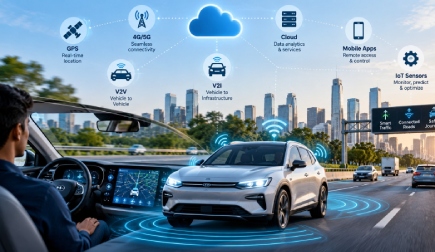
Connected Vehicles Explained: Skills Required to Work in Telematics & IoT
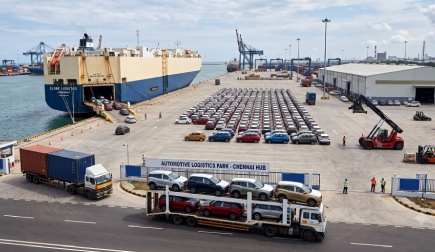
Automotive Logistics & Supply Chain: Skills Driving the Next Phase of Mobility
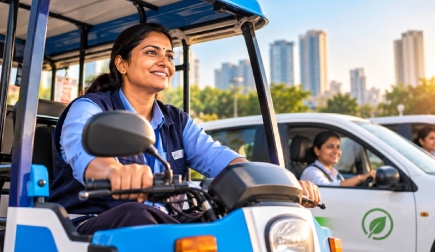
Growing Force of Women in E-Rickshaw and Fleet Services
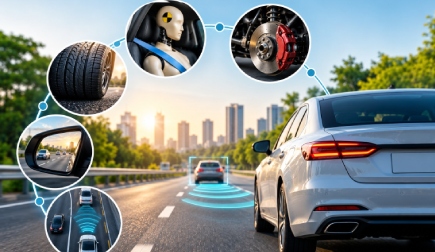
Road Safety Starts with Science: What Every Indian Driver Should Know
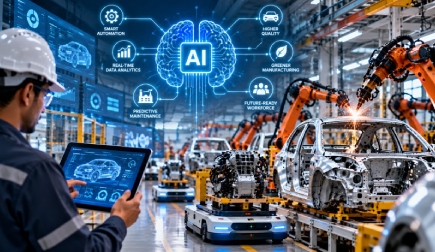
AI in Automotive: How Smart Factories Are Changing Production Lines
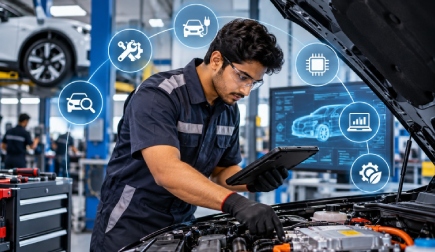
Skills Needed for Modern Auto Service Technicians
The modern automobile is no longer just a machine that takes people from one place to another. It is increasingly becoming a connected...
A car may be assembled in one factory, but its journey begins much earlier. Thousands of components can come from different suppliers, cities and countries before they reach the production line.
India's mobility sector is witnessing a quiet but powerful transformation. Women are increasingly taking the driver's seat in e-rickshaws...
Every journey on India's roads involves thousands of decisions made in a matter of seconds
The automotive manufacturing floor is undergoing a fundamental shift. For decades, production efficiency...
The role of an auto service technician in India is changing rapidly. A technician who once spent most of the day working on engines...
