




07 Oct 2026
Connected Vehicles Explained: Skills Required to Work in Telematics & IoT
More Links




Discussions regarding Industry 4.0 mostly revolve around things like Internet of Things (IOT), robots, 3D printing and other disruptive technologies that have been able to grab eyeballs in the recent years. Whereas, we often tend to overlook the workers in this emerging industrial era, or at least it does not come naturally to our mind, unless it is to talk about the concerns related to potential job losses. Interestingly, experts believe that the revolution will result in more job creation than loss. Skills of different types will be prioritized over everything, and no one is likely to stand a chance, if not efficiently skilled. Even in the automotive industry, while most physically demanding or routine jobs will vanish in the near future, newer roles will stem out of the old ones that will mostly involve flexible responses, programming, supervising, and troubleshooting interconnected machines. As we are fast approaching towards these developments in the industry, building a culture of continuous learning in the workplaces seems to be the key to supporting the same.
Industry 4.0 in brief
The introduction of computers, a disruptive new technology was what fuelled Industry 3.0, back in the 80s. Fast forwarding to now, computers are connected and communicate with one another to ultimately make decisions without human interventions. This has been made possible through a combination of cyber-physical systems, the Internet of Things (IOT), and the Internet of Systems.
This transition is so compelling that it is being called Industry 4.0 to represent the fourth revolution that is going to impact the industries after the computer revolution of the 80s. From the first industrial revolution (mechanization through steam power) to the mass production and assembly lines using electricity in the second, the fourth industrial revolution will take what was started in the third with the adoption of computers and automation and enhance it with smart and autonomous systems fuelled by data and machine learning moving from mass production systems to mass customization products.
Shift in training needs: Employers’ Dilemma
Given the complete change in the automotive ecosystem in the recent years, it becomes imperative to prepare the workforce and conduct strategic workforce planning. For this, the automotive sector, including OEMs, suppliers, dealers, and others have to look at hiring skilled resources for new job roles, adapting existing roles to the new methodologies, and upgrading technical skills of all resources.
However, the accelerated rate of technological advancement is fundamentally changing the type of skills needed for future jobs. With the onset of Industry 4.0, which is a paradigm shift in itself, India is expected to encounter a number of challenges related to the mismatch of skills of its workforce. As the companies need to prepare their entire workforce to harness the power of technology, the utter lack of knowledge about exactly what technologies will be developed and how they will impact work, has led to a lot of confusions. And this is where the employers’ dilemma begins. Because, the employers not only have to lure highly skilled talent but also have to reskill or up-skill existing resources to ensure competitiveness.
How to prepare for Industry 4.0?
The first step to preparing for Industry 4.0 is for employers to make sure that their resources are equipped with the necessary skills to step into the new world. This means frequent training and updated Learning and Development initiatives that address the pain points and learning gaps of the existing workforce. It also means accelerated onboarding and skill upgrades for the new hires to make them multi-skilled.
A variety of hard skills will come into demand in the Industry 4.0. Workers will have to apply quick reasoning in many situations, and have to have the theoretical, as well as, practical knowledge related to a specific job or process. While multiple hard skills will be appreciated everywhere, soft skills will gain importance like never before. Change is the only constant, and employees need to keep an open mind for change, be flexible enough to adapt to new roles and work environments and get accustomed to continual interdisciplinary learning.
Considering the large resource pool that needs training, the diverse training needs of the workers, a large and often distributed workforce, the automotive industry needs a new training model that can proactively improve resource knowledge base. However, it is also worth taking into account that, driving a skilling revolution requires massive investment, and a proper vision, which many organization may lack at the moment. Also, despite having several government schemes promoting skill development, many companies may not be able to predict the exact industry-specific and occupation-specific competencies that they will be needing few years down the road, as Industry 4.0 progresses further.
Training programs have to be more scalable, personalized, and flexible to adjust to the dynamic needs of Industry 4.0. To achieve great training outcomes and to ensure that training costs are controlled, the automotive industry needs a new age training program- one that is complementary to the new age manufacturing unit.
ASDC- the Answer to India Auto Inc.’s Skilling requirements
This calls for expert interventions, and that is exactly what Automotive Skill Development Council (ASDC) excels in. Known for making skills aspirational, it has been supporting the automotive industry by continuously developing data-driven solutions to the skills challenges in industry 4.0.
ASDC has taken several significant steps towards this goal and has launched massive training programs aimed to reskill and up-skill the workforce for the auto industry. The program is implemented with an objective to bridge demand and supply mismatch of skilled manpower by providing placement opportunities to these candidates. One of the most remarkable steps by ASDC in FY 19-20 is the building of an inventory of skilled manpower in the automotive sector, which includes candidates who have undergone skill training and assessments. By combining analytics, new technologies and the solid knowledge of the talent space, ASDC helps employers to shortlist the right candidates based on their skills, resulting in the formation of an agile workforce, well-equipped with versatile skills to deal with industry 4.0. Â
Clearly, the impact of industry 4.0 will only increase from this point onwards, and going forward, we have to accept the reality, and give in to its massive influence in the job world. However, to stay ahead of the curve in the increasingly competitive and complex market, employers have to make sure they equip their workforce with the right tools to harness the opportunities better. The time is now to make strategic decisions for the future, and take action to prepare the workforce for the unpredictability of the future. And in this case, one can only be prepared enough through gaining more knowledge.Â

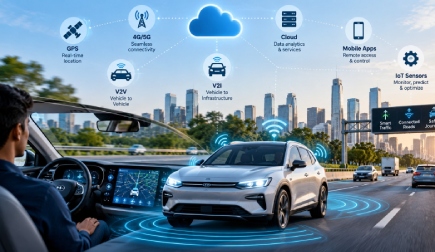
Connected Vehicles Explained: Skills Required to Work in Telematics & IoT
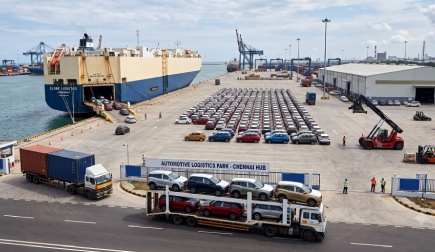
Automotive Logistics & Supply Chain: Skills Driving the Next Phase of Mobility
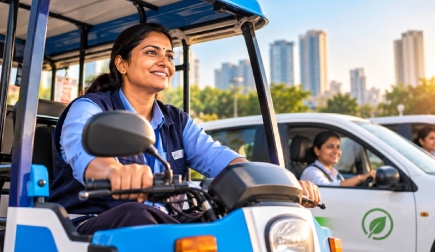
Growing Force of Women in E-Rickshaw and Fleet Services
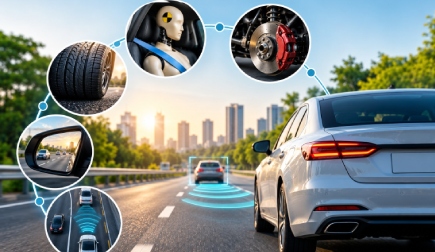
Road Safety Starts with Science: What Every Indian Driver Should Know
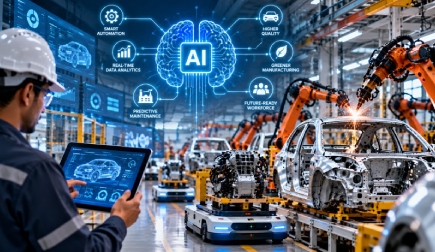
AI in Automotive: How Smart Factories Are Changing Production Lines
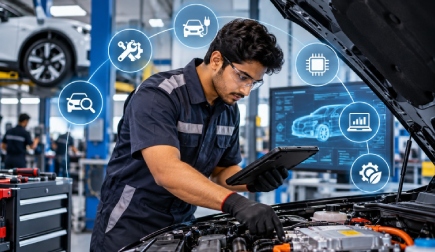
Skills Needed for Modern Auto Service Technicians
The modern automobile is no longer just a machine that takes people from one place to another. It is increasingly becoming a connected...
A car may be assembled in one factory, but its journey begins much earlier. Thousands of components can come from different suppliers, cities and countries before they reach the production line.
India's mobility sector is witnessing a quiet but powerful transformation. Women are increasingly taking the driver's seat in e-rickshaws...
Every journey on India's roads involves thousands of decisions made in a matter of seconds
The automotive manufacturing floor is undergoing a fundamental shift. For decades, production efficiency...
The role of an auto service technician in India is changing rapidly. A technician who once spent most of the day working on engines...
