


07 Oct 2026
Connected Vehicles Explained: Skills Required to Work in Telematics & IoT
More Links




Any development in new technology brings forth a new dimension in human evolution but few technological developments bring with them their survival wars. The War of the Currents (1880~1890), Videotape format war (1978~80), first Browser war (~the 1990s), HD optical disc format war (2006~2008) to name a few. These wars change the course of technology and the world for the better.
In the EVs market, one such war is already on which is, for EV charging system amongst four types developed by the current EV manufacturers (Tesla’s Supercharger system, CCS-Combined Charging System, CHAdeMO & GB/T. While this may take some time to settle EV segment is very soon going to see the full wrath of another technology war that has already begun with the meteoric rise of Tesla’s EV, THE “WAR OF THE BATTERIESâ€.
In contrast to ICEVs which had only two technologies based on ignition point of fossil fuels-spark plug ignition (SI technology for a petrol engine) & Compression Ignition (CI for Diesel engine), yet both were complementary and grew over the next 150 years, However, in case of EVs, which may have multiple drive mechanism, yet a well-suited energy source of electrical power is required by all these EVs makers to make EVs acceptable to masses. “Battery†is the obvious synonyms for these portable energy sources. While many of these battery technologies have performed well till now in western countries with a limited number of EVs, the right choice for the Indian mobility market, with multiple challenges is going to play a crucial role in the survival of EV manufacturers. The varied Indian mobility market with extreme weather conditions (rains, temperature, dust, humidity, etc.), challenging traffic conditions including rough roads, (many times waterlogged) and typical non-standard driving habits of people, or a combination of all them, poses a different level of challenge for these EVs and their batteries, affecting the travel range, performance & reliability.
Historically, since the time of 2,200 years old “Baghdad Batteryâ€, the quest for a perfect battery has never died and with time the batteries have come a long way to become integrated with our daily life and depending upon their ability to get recharged, they classified as primary (non-rechargeable) or secondary (rechargeable) batteries.
These batteries have one biggest advantage over IC engines – since, unlike IC engines, they are NOT subject to the limitations of the Carnot cycle dictated by the second law of thermodynamics, and hence they can convert chemical energy into electric energy, with higher energy conversion efficiencies. While this energy conversion ratio could be less than 15%, the EVs offer a much higher energy conversion exceeding 70%.

Though in many applications primary & secondary batteries have interchangeable roles yet as the capacity and load requires increases, the choice also shift from Primary to Secondary Batteries as shown below.


While each of the above battery technology would fighting for its righteous place in the burgeoning EV market a rebound of Internal Combustion Engine (ICE) With Hydrogen is also expected with the development of Hydrogen fired IC Engine (H-ICE): A H-ICE is simply a technically upgraded version of the conventional IC engine and used Hydrogen as fuel instead of fossil fuel, a technology developed in 1970. Unfortunately being governed by the Carnot cycle, it has similar energy output constraint as that of standard IC Engines and hence lower than Fuel Cells. Also, these modified IC engines have been found sensitive to match the fluctuations in load. Despite many attempts by Toyota, Mazda, BMW to develop this technology is yet to take off, still in May 2021, Toyota confirmed its participation in the forthcoming Super Taikyu 24 Hour Racing Endurance Series4 with its H-ICEV Corolla having 1.6-litre, inline-3, turbocharged engine. Yet apart from the challenges of handling Hydrogen as fuel (similar as in case of FCs system), the technology has a long time to go before proven.
While many of the older battery technologies e.g. LAB (lead-acid battery), Nickel Metal Hydride Battery (NiMH), Sodium (Na) Nickel Chloride Battery or ZEBRA Battery, Lithium Polymer Battery (LPB) have already lost the preliminary fight in this “War of The Battery†in which IC Engine is once again getting ready to bounce back with H-ICE technology, you never know who will come out as winner in this “War of The Battery†and which energy systems would come out as winner to capture the mobility world in the coming century.
 Though in current times we do not have many legends like Edison & Westinghouse/ Nikola Tesla, still in present times we do have worthy competitors opposite to each other in this “War of The Batteryâ€, yet with so many battery technologies eying for the future EVs market, it would be interesting to watch as to who all will survive this “War of The Batteryâ€, a war which is going to have its battleground on the Indian sub-continent. The winner/ winners will finally capture the Indian EV market not be with the best of technology but a technology with is environment friendly has mass acceptance as well as ease of operation, long life with long-range, reliable and safe yet with low cost. We need to wait and watch this “War of The Battery†which is going witness a bloodbath in coming years while the battery makers need to keep in mind the following four key learnings from the similar technology/ standards wars fought earlier:

Prabhat Khare
Director, KK Consultants
BE (Electrical), Gold Medalist, IIT Roorkee
Life Member of National Safety Council
BEE Certified Energy Manger
Lead Assessor For ISO 9K, 14K, 45K & 50K
Industry Expert from Tata Motors, Honda Cars & Ashok Leyland
Email: prabhat.pkmail@gmail.com/ khareprabhat@hotmail.com

Connected Vehicles Explained: Skills Required to Work in Telematics & IoT
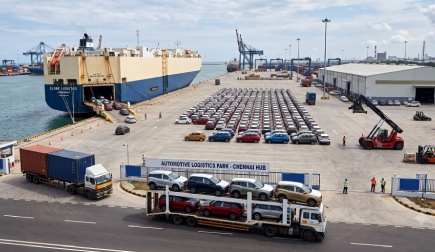
Automotive Logistics & Supply Chain: Skills Driving the Next Phase of Mobility
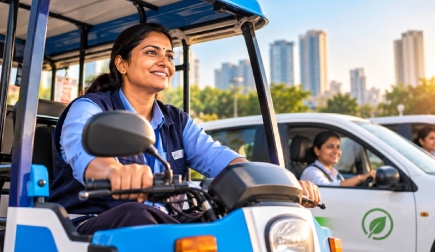
Growing Force of Women in E-Rickshaw and Fleet Services
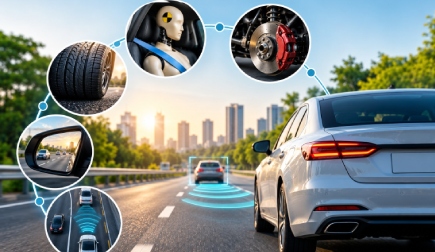
Road Safety Starts with Science: What Every Indian Driver Should Know
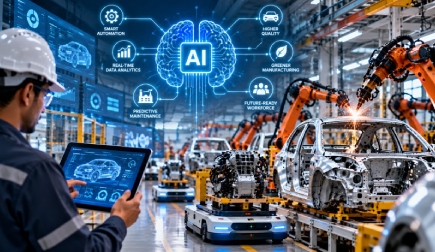
AI in Automotive: How Smart Factories Are Changing Production Lines
Skills Needed for Modern Auto Service Technicians
The modern automobile is no longer just a machine that takes people from one place to another. It is increasingly becoming a connected...
A car may be assembled in one factory, but its journey begins much earlier. Thousands of components can come from different suppliers, cities and countries before they reach the production line.
India's mobility sector is witnessing a quiet but powerful transformation. Women are increasingly taking the driver's seat in e-rickshaws...
Every journey on India's roads involves thousands of decisions made in a matter of seconds
The automotive manufacturing floor is undergoing a fundamental shift. For decades, production efficiency...
The role of an auto service technician in India is changing rapidly. A technician who once spent most of the day working on engines...
