




07 Oct 2026
Connected Vehicles Explained: Skills Required to Work in Telematics & IoT
More Links





India is aligned with its vision to achieve complete electrification in transport by 2030. Prime Minister Narendra Modi’s speech at the 26th Conference of Parties (CoP26) to the United Nations Framework Convention on Climate Change, where he introduced the scheme of ‘Panchamrita’ is aimed at opening new avenues for an EV revolution in India.
Today, India is among the countries that emanate large amounts of CO2 emissions and to combat the challenge the country needs to show much more alacrity in the development of sustainable EVs. There is no denying the fact that India’s EV revolution is still in nascent stages and to achieve the 2030 target, the government and the industry have to come together in full force to address the pitfalls that are halting its growth.
The lack of a skilled workforce is one of the major challenges that lie ahead of India’s EV industry. India’s geography and constantly changing climatic conditions are to be kept in mind while developing EVs. The incident of E scooters emitting smoke in April this year is an indication that we need to have robust manufacturing in place for EVs.
Safety will always remain a prime concern for any customer and the recent incidents have opened a much wider debate on whether India has a talent pool of engineers that can ensure quality EVs with the highest standards and safety measures.Â
EVs is a sector that is inclined to drive India’s economic growth and to ensure this we need to have a talent pool of mechanics and auto engineers that are well versed with skills like mechatronics. The world’s leading EV manufacturer, China is way ahead in providing such skills to the engineer and India needs to address this skill gap at the earliest.
The low-cost infrastructure for developing EVs’ key component—batteries has accelerated China’s EV market. Other than this a strong supply chain of raw materials, and a robust vendor ecosystem add much more to China’s growth in EVs.
Whereas, In India, the lack of affordable raw material halts the manufacturing of low-cost batteries. In many cases, India also lacks low-cost electrical infrastructure, and to develop this the cost is sometimes even more than the cost of a charging station itself.Â
For the personal use of EVs, consumers face issues like different electric tariffs in different locations. In some of the societies, setting up EV charging is challenging as the sale of electricity from residential meters is not allowed.
It is rather a chicken and egg problem to develop a high-power charging infrastructure for EVs. It is not financially viable to install these charging stations until we have a mass of EVs on road. We still need to instill confidence among the consumers to adopt EVs as a viable, safe, and sustainable source of mobility.
Only 50% of Indian states have crafted the EV policies. This is a perplexing state as for complete adoption of EVs all the states will have to show alacrity towards having favourable policies in place. All states need to be aligned in supporting each other to promote EVs. They need to invest in strengthening their R&D capabilities and introduce new technologies that will accelerate the production of EVs in India.
Other than this, states in collaboration with the industry can also introduce advanced curricula in auto engineering dedicated especially to EVs so that the workforce is industry-ready.

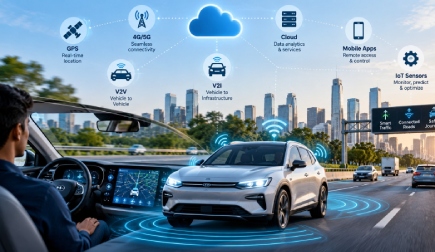
Connected Vehicles Explained: Skills Required to Work in Telematics & IoT
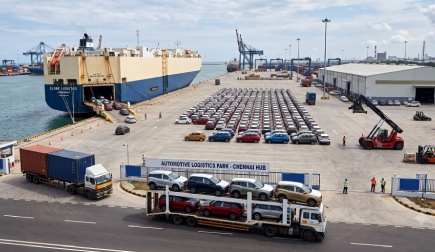
Automotive Logistics & Supply Chain: Skills Driving the Next Phase of Mobility
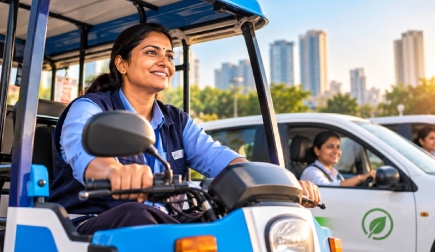
Growing Force of Women in E-Rickshaw and Fleet Services
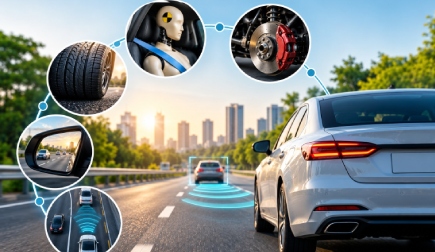
Road Safety Starts with Science: What Every Indian Driver Should Know
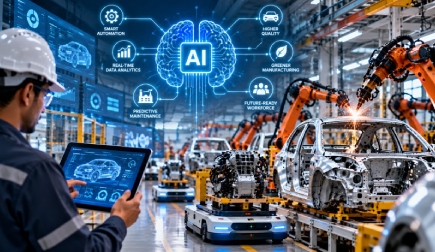
AI in Automotive: How Smart Factories Are Changing Production Lines
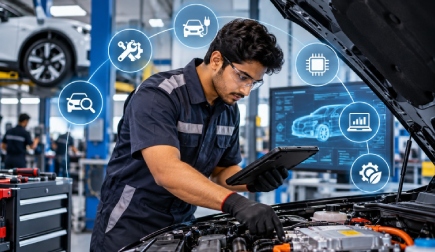
Skills Needed for Modern Auto Service Technicians
The modern automobile is no longer just a machine that takes people from one place to another. It is increasingly becoming a connected...
A car may be assembled in one factory, but its journey begins much earlier. Thousands of components can come from different suppliers, cities and countries before they reach the production line.
India's mobility sector is witnessing a quiet but powerful transformation. Women are increasingly taking the driver's seat in e-rickshaws...
Every journey on India's roads involves thousands of decisions made in a matter of seconds
The automotive manufacturing floor is undergoing a fundamental shift. For decades, production efficiency...
The role of an auto service technician in India is changing rapidly. A technician who once spent most of the day working on engines...
