




07 Oct 2026
Connected Vehicles Explained: Skills Required to Work in Telematics & IoT
More Links




The entire world is home to the unique population of India, scattered in almost every country, big and small. A majority of them are living successful lives as immigrant, contributing their best for the welfare of the country they have settled in. To a great extent, it is a success story for the India emigrants around the globe, and the credit majorly lies in their unique ability to leverage their personal skills, work hard and adapt to changing environment. India, as a country, has its biggest strength hidden in its demographic dividend, and going forward, as the country aims to position itself as the skilling capital in the new world order, its demography has to play an instrumental role. There are at least 10 to 12 million youth that enters the workforce of the country every year, and it is at this point that the country should definitely explore its scopes by training and skilling them abiding by the global standards. The reason is clear- a wide variety of nations, including Russia, Italy, Germany and even East European countries like Romania have a huge demand for skilled talent, and India has the advantage of skilling its youth for the global market.
Many of these nations even have various state-supported programs to attract international talent. Being a strong democratic country, India should leverage its image as a tolerant society, and hence should grab every opportunity to establish partnerships with as many countries, much like the recently announced agreement with Japan, which will enhance international employment opportunities for our skilled workforce willing to work abroad.
The core objective of such Government to Government arrangements is to score advantageous terms for migrant workers, as well as safeguarding their rights in a foreign land. Additionally, it is imperative for an arrangement of this stature to provide international recognition to India’s National Skill’s Qualification Framework (NSFQ), and to the skills acquired under this framework. If deemed necessary, NSFQ can make provisions for additional training programs or bridge modules, specifically for the training of the youth preparing to enter the international markets, in order to meet the requirements of the receiving country.
Furthermore, there should be arrangements for formal and structured pathways for smooth labour mobility by the private sector. Although here are multiple organizations taking care of international mobility, for prevention of any potential exploitation of migrant workers in the receiving countries, it is necessary to have concrete code of conduct in place. In fact, it is better if international mobility of labour can be treated as an essential part of India’s economic diplomacy. That way, the entire ordeal to break down barriers in international labour supply, and ensure hassle-free movement of talent will get easier by multiple times.
Additionally, this approach to skilling in our country can prove to be highly beneficial for every stakeholder. For instance, it enables the Indian youth to earn decent pay for their hard work that helps them channelize their motivation into increased productivity. Hassle free movement of Indian migrants in international job markets will result in a boost in the international remittance for India, which in turn, will boost the Indian economy, as well as, will bring improvement in the living standards. With these hardworking and positive youth continuing to contribute to the receiving country’s economy, there will be further acceptance of migrant workers from India who are tolerant, adaptable and easy to assimilate, helping India to develop a good image in front of the world. After many years, when these workers decide to return home, they will bring new knowledge, experiences, and methods with them, and by sharing these among the people, they can contribute towards enhancing productivity, as well as, enriching the domestic economy. What more? By the means of G2G arrangements with the many countries around the world, India can get its hands on world-class pedagogy, technology, curriculum, content and the necessary infrastructure for the delivery of vocational education.
With that said, it is now clear how in order to achieve its goal to become the Skill Capital of the world, India has to join hands and make formidable partnerships with multiple countries in terms of skill development, like it has done with Japan, UAE, and many Scandinavian countries. However, in other news, the post pandemic world has brought with it a completely new framework of virtual operations that runs on digital platforms to provide skilling lessons to trainees, while connecting them to international employers. It’s a promising development that will present exciting opportunities for India to leverage its power in the skilling sphere. All that is left now, is for the government to formulate adequate policies to address the massive issue of international mobility in the post-COVID world, which may require imagination of newer paradigms of digital skilling through rapid adoption of digital technologies. Crossing this one last hurdle will bring India a step closer to its goal of becoming the international hub of skilling.

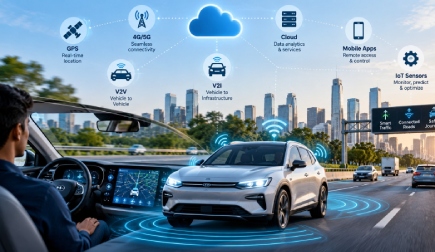
Connected Vehicles Explained: Skills Required to Work in Telematics & IoT
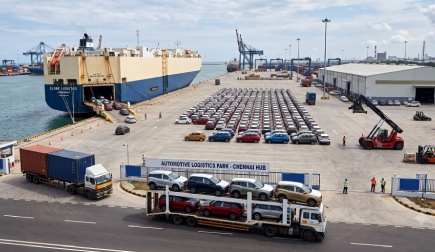
Automotive Logistics & Supply Chain: Skills Driving the Next Phase of Mobility
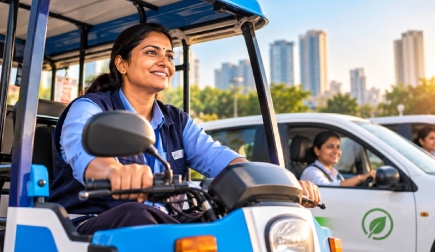
Growing Force of Women in E-Rickshaw and Fleet Services
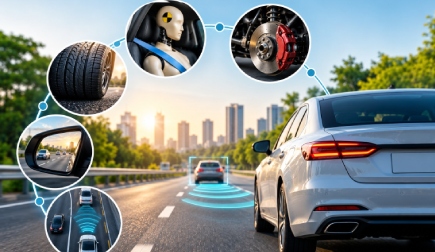
Road Safety Starts with Science: What Every Indian Driver Should Know
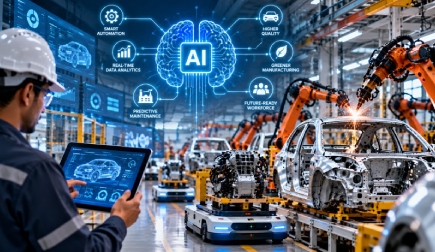
AI in Automotive: How Smart Factories Are Changing Production Lines
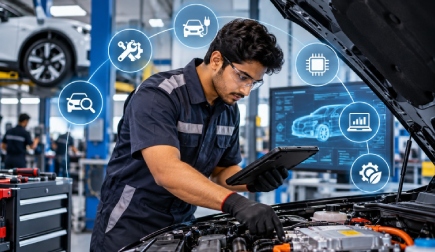
Skills Needed for Modern Auto Service Technicians
The modern automobile is no longer just a machine that takes people from one place to another. It is increasingly becoming a connected...
A car may be assembled in one factory, but its journey begins much earlier. Thousands of components can come from different suppliers, cities and countries before they reach the production line.
India's mobility sector is witnessing a quiet but powerful transformation. Women are increasingly taking the driver's seat in e-rickshaws...
Every journey on India's roads involves thousands of decisions made in a matter of seconds
The automotive manufacturing floor is undergoing a fundamental shift. For decades, production efficiency...
The role of an auto service technician in India is changing rapidly. A technician who once spent most of the day working on engines...
