The current EV technology is standing at a similar place where ICEV technology was standing in early 1900, a time when mobility sectors was ruled by horse buggies & carriages. Being better, efficient, convenient, it is just a matter of time EVs will overtake ICEVs disrupting the complete automotive world. With EVs arrival, automobiles are slowly becoming off the shelf consumer goods like white goods, in which almost all technology giants like Apple, Sony, LG, Huawei, Oppo and Xiomi etc. are foraying with full force. The future of automobiles is not going to remain same. The arrival of EVs is going to open up a host of new business opportunities as well as challenges in Indian automotive sector where conventional wisdom may not survive. Global EV industry is projected to grow from US$ 246.74 Billion in 2020 to US$ 985.72 Billion in 2027 at a CAGR of 17.4% and considering the fact that India's oil import bill is around US$ 101.4 billion, India had to jump into thus new means of mobility.
In last FY (2019~20), the EV sales in India were merely 0.38 million units, in which the electric 2W were the highest selling product. The EV battery market was at 5.4 GWh during the same year (IESA report, released in Dec’20201). With the recent push from GoI for electrical mobility through its new EV policy2, the EV market is expected to grow at CAGR of 44% during 2020~2027 hitting 6.34-million-unit annual sales by 2027. The annual battery demand is forecasted to grow at 32% CAGR to hit US$ 15 billion by 2027 (with a capacity of 50 GWh out of which 40+ GWh would be Li-Ion).
With such high growth rate in EV market, while it will be offering new opportunities in already established automobile businesses, it is going to open many new business opportunities in the areas of engineering, electronics, software & hardware, energy & battery management, automation and control system to name a few, covering complete market verticals. We take a look at some of these.
- Battery Charging & Battery Management: With rise of EVs, one sector which is going to explode is the battery management sector. Considering the economies of scale, though we may not be able to compete in battery manufacturing, there are many other business avenues for entrepreneurs to pitch Considering the current battery technologies, it can be confidently aid that present batteries fitted on EVs may last anything between 10~20 years before they need replacement. However for their daily run charging would any way be needed wherever these EVs go. This factor alone opens up few major business opportunities in times to come e.g.
- Building Charging Infrastructure: This is one opportunity area which is the basic need for any EV based mobility eco-system. It’s the life line and would rise exponentially as the numbers of EVs rise on road go up, needing a large scale energy distributed infrastructure of battery charging. While it may look simple, yet this segment alone opens up many other interlinked tier 2 business opportunities involving DISCOMs, backward integration of charging station with 24*7 power supply as well as integrated metering, remote control & monitoring, billing & monetary transaction
- Creating Battery Swap Stations: With growing electric 2W/3W EVs, batteries swapping is a possibility, if batteries are standardised by consensus or by regulation for these 2W/3 W However, till then these stations may have to stock batteries of several kinds/ types, a challenge yet with a good business prospects for providing ready to move, instant power to the drained 2W/3Ws instead for waiting at charging station during the charging time. Some 2W EV manufactures have already tried to create such swapping stations which may need to be expanded across the country in order to increase acceptability of EVs. Let us see how this sector evolves in future with coming up few Giga factories for 2W EVs having massive capacities but one this is sure that the battery swap business would be a winning strategy in times to come.
- Battery Refurbishing/ Regeneration: When a battery reaches its end of usable life, there are two options: the most common is to replace it and send the old battery goes for recycling, both means have their own costs implication to both vehicle owner as well as recycler. This approach may not also be environmentally friendly apart from being highly capital Battery refurbishing or regeneration could be a solution which is an engineering process adopted by which batteries are brought back to a level which is functionally acceptable for a healthy performance. Moreover, this also is environmentally friendly process due to less burden on environment for creating new batteries needed for replacement and also of batteries getting disposed of.
- Battery Recycling: This is an End of Life Treatment process for batteries. Though there are recyclers available for Lead-Acid Batteries used in existing 3W EVs, for other battery alternatives like Li-Ion, Al-Air Battery, and Fuel Cell etc. used in other EVs existing recycling technologies need to mature for commercialisation. However, with current “battery war†going on behind the door, Li-Ion Batteries (70% market share) look to be the present leader. But if safe ways of recycling Li-Ion batteries are not established in time, very soon these EVs would be creating an e-waste time bomb for coming generation. It is estimated that from the EVs sold globally in 2017 alone, in next 8~10 years, about 250 Million Tonnes of spent lithium-ion batteries would be generated & with approximate volume of about 0.5 million Cubin meters, would be enough to fill the Royal Albert Hall in London almost six times. The situation would be more serious than what we currently face with ICEVs related to fall in AQIs & global Hence there are large business possibilities in developing process, mechanism & technologies to recycle the discarded Li-Ion batteries from EVs.
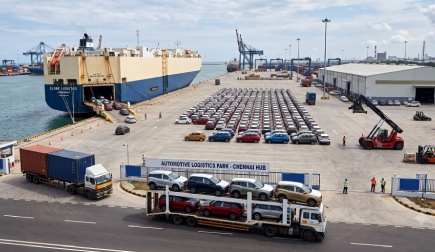
- Development of New Supplier Base: The rise of EVs would be needing new tooling, new machining, new processes & new components in the existing US$70 billion Indian automobile components The existing ancillary units will have to gear up for this new challenges and diversify as the automobiles move from being purely mobility means to consumer goods. In times to come probably most of the current manufacturing technologies would become irrelevant/ obsolete as EVs won’t be requiring many of them. The new EV ancillary industry would be based on high end automated technologies involving robotics, cobotics, 3D printing, high end electronics, new age electrical motors & solid state drive technologies (battery manufacturing will be a separate segment in itself) yet retaining some of the existing technologies. Many studies indicate that current US$ 58 billon, Indian auto ancillary market will be more than US$ 200 billion by 2027, with major chunk going to EV’s related business.
- Vehicle Scrapping: With launch of Vehicle Scrappage Policy 2021, this new business avenue has already been opened. While India's first authorized recycling plant has already been set up in Greater Noida, a New Zealand-based NRI of Punjab origin has also set up India’s first auto shredding plant in With almost 380 Million Vehicles produced in India since 1971 most of which have never left the road, there a huge business opportunities in this business sector which literally is a gold mine.
- Training & Skill Development: The rise of EVs, would need special skill sets in future technicians/ engineer, thus providing great business opportunity in the areas of training and skill Unlike the ICEV era during which the skills to handle ICEV were primary acquired by hit & trial, complex skills needed to handle the EVs would require a highly structured, systematic and professional approach. Being sensitive to this expected future need, the GoI has already established many Skill Sector Councils under National Skill Development Corporation (NSDC)3. However to handle the projected growth numbers of EVs, country would be needing large scale skilling both in organised and unorganised sector all across the country at various levels. This is an areas in which I see a tremendous business opportunity in a wide range of areas of mechanics, electrical & electronics, controls, battery management & programming etc.
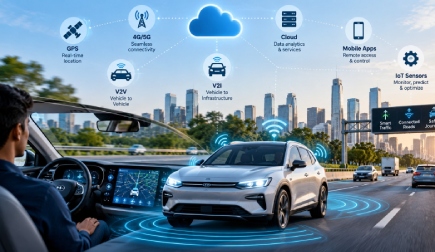
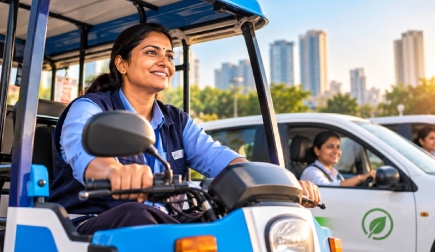
- Last Mile Connectivity: Though this is already happening with 3W EVs which have replaced manual rickshaws in almost all the cities of India for good. Yet believing in Darwinian growth I believe that in times to come CAEVs (Connected & Autonomous EVs) would supersede EVs and would serve short distance movement needs of people – with a specified area range - unmanned & geo-fenced This would be offering many interesting business opportunities in times to come from operating & managing these CAEVs, maintaining them, monitoring the utilisation & performance as well as managing their parking However this is a possibility and only time will tell how soon it becomes reality.