




07 Oct 2026
Connected Vehicles Explained: Skills Required to Work in Telematics & IoT
More Links




In the fast-evolving world of automobiles, welding and fabrication play a crucial role in ensuring the strength, safety, and performance of vehicles. From building chassis and exhaust systems to manufacturing intricate components for electric vehicles (EVs), skilled welders and fabricators are the invisible force behind every moving machine. With India's automotive sector rapidly adopting advanced technologies, the demand for trained professionals in welding and fabrication is growing across automobile jobs — both in traditional internal combustion engine (ICE) vehicles and next-gen EV platforms.
Why Welding & Fabrication Matter in the Automotive Sector
Automobiles are a product of precision engineering and durable assembly. Welding and fabrication are core to assembling vehicle structures, connecting metal parts with accuracy, and ensuring each joint withstands high pressure, vibration, and corrosion. In manufacturing units, workshops, and R&D labs, skilled welders contribute to:
The shift to electric mobility, hydrogen fuel, and lighter materials has further enhanced the relevance of specialized welding techniques like TIG, MIG, SMAW, and robotic welding. This opens the door to a new generation of automotive technicians who are not just craftsmen but tech-enabled professionals.
Career Opportunities in Automotive Welding & Fabrication
The automotive manufacturing industry offers a wide range of automobile jobs in the welding domain. These include:
Whether one enters through vocational education or advances through industry experience, welding and fabrication open multiple career avenues — from entry-level roles to high-skill, high-paying positions.
How ASDC Is Building the Welding Workforce of Tomorrow
Automotive Skills Development Council (ASDC), India's only sector skill council for the automotive industry, has created structured pathways to skill, reskill, and certify individuals in welding and fabrication through industry-aligned automotive courses.
ASDC’s welding job roles include:
Trains individuals in TIG, MIG, and SMAW welding using both manual and robotic equipment. Suitable for those with 5th–9th grade education or previous welding assistant experience.
Designed for professionals who deliver training sessions using pre-set lesson plans, ensuring others acquire strong foundational and practical knowledge.
Equips learners with simulation-based training in welding via Augmented Reality — a step towards safer, smarter training environments in line with global standards.
These automobile technician courses integrate industry-standard practices, engineering drawing interpretation, safety protocols, employability skills, and hands-on training to ensure job-readiness from Day One.
Bridging Skill Gaps Through Quality Training
ASDC’s nationwide network of affiliated training centres and partners offer certified automobile training across cities and industrial clusters. These centres are equipped with welding labs, simulators, and expert trainers to provide real-world exposure to students.
For school dropouts, ITI graduates, or engineering diploma holders, ASDC-approved automotive technician classes offer a direct route to formal employment, apprenticeship, or entrepreneurial ventures. Learners not only master core skills but also gain soft skills, safety training, and digital literacy.
Final Thoughts
In today’s automotive industry, welders and fabricators are no longer back-end operators. They are frontline contributors to innovation, safety, and sustainability. With ASDC’s structured automobile courses and clear job role definitions, youth can confidently pursue a fulfilling career in this essential and future-proof field.
To explore automobile technician courses or locate a training center near you, visit www.asdc.org.in.


Connected Vehicles Explained: Skills Required to Work in Telematics & IoT
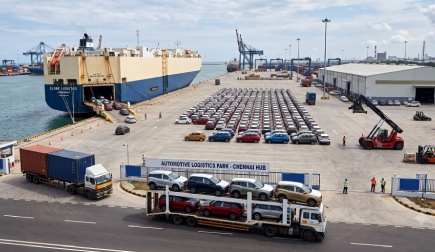
Automotive Logistics & Supply Chain: Skills Driving the Next Phase of Mobility
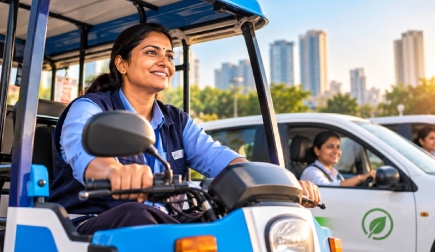
Growing Force of Women in E-Rickshaw and Fleet Services
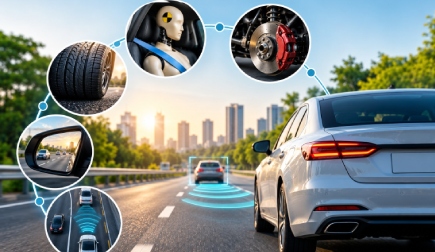
Road Safety Starts with Science: What Every Indian Driver Should Know
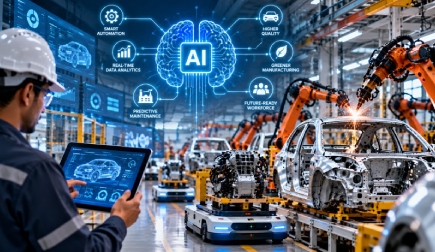
AI in Automotive: How Smart Factories Are Changing Production Lines
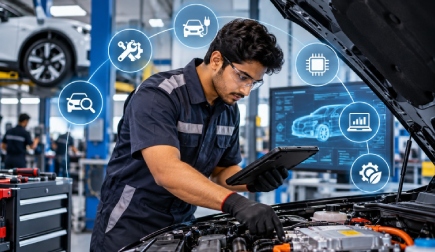
Skills Needed for Modern Auto Service Technicians
The modern automobile is no longer just a machine that takes people from one place to another. It is increasingly becoming a connected...
A car may be assembled in one factory, but its journey begins much earlier. Thousands of components can come from different suppliers, cities and countries before they reach the production line.
India's mobility sector is witnessing a quiet but powerful transformation. Women are increasingly taking the driver's seat in e-rickshaws...
Every journey on India's roads involves thousands of decisions made in a matter of seconds
The automotive manufacturing floor is undergoing a fundamental shift. For decades, production efficiency...
The role of an auto service technician in India is changing rapidly. A technician who once spent most of the day working on engines...
