




07 Oct 2026
Connected Vehicles Explained: Skills Required to Work in Telematics & IoT
More Links





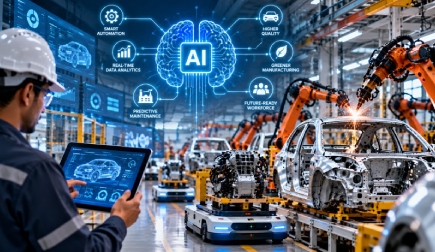
The automotive manufacturing floor is undergoing a fundamental shift. For decades, production efficiency depended largely on automation, standardised processes and the experience of engineers and shop-floor teams. Today, Artificial Intelligence is adding a new layer of intelligence to these systems. The result is a factory that does not simply execute instructions, but continuously analyses data, identifies patterns and helps people make faster decisions.
This transformation is particularly relevant for India, where automotive manufacturers are simultaneously dealing with rising customer expectations, multiple powertrain technologies, cost pressures and the need to build globally competitive manufacturing capabilities. For the automotive sector, AI is not about replacing people. It is about enabling workers, improving decision-making and creating production systems that are more efficient, safer and more responsive to market demands.
AI in Automotive Manufacturing
Traditional automation is designed to perform defined tasks repeatedly, following a set of pre-programmed instructions. Artificial intelligence changes this approach by enabling machines and production systems to learn from operational data, identify patterns and respond to changing conditions. In an automotive production environment, AI can analyse data generated by cameras, sensors, robots, machines and Manufacturing Execution Systems to identify quality deviations, predict equipment failures, optimise production sequences and improve energy efficiency.
Modern automotive manufacturing generates vast amounts of data across robotic welding stations, paint shops, assembly lines, testing equipment and supply chains. In the past, much of this data was used primarily for monitoring or record-keeping. AI is now helping manufacturers turn this information into actionable insights by analysing it in real time and identifying patterns that may not be visible through conventional monitoring.
Across India, automotive manufacturing facilities are increasingly adopting connected sensors, machine vision systems and predictive analytics to make production processes more intelligent and responsive. Instead of waiting until a vehicle reaches the end of the assembly line to identify a quality issue, AI-enabled systems can detect unusual patterns and deviations much earlier. This allows production teams to take corrective action quickly, reduce waste and rework, and maintain greater consistency across the manufacturing process.
Computer vision is one of the most practical applications of AI on automotive production lines. AI-enabled vision systems can inspect components and finished parts for paint defects, weld inconsistencies, incorrect component fitment and other quality deviations. These systems can continuously analyse images and identify issues at a speed and scale that would be difficult to achieve through manual inspection alone. By detecting problems earlier, manufacturers can intervene before defects move further along the production line, helping improve product quality while reducing material loss and production delays.
Turning Factory Data into Intelligence
Indian automotive manufacturers are already implementing these technologies at scale. Mahindra & Mahindra, for example, has developed a manufacturing AI framework called MATRIX, covering areas such as quality, maintenance, energy, production agility and machine connectivity. Its Chakan facility uses Industry 4.0 technologies including AI, IoT, 5G connectivity and digital traceability. The facility also combines robotics, automated material movement and real-time quality monitoring.
Mahindra has also reported AI applications for paint defect detection, predictive maintenance, weld integrity and energy optimisation. Its FY2025 annual report highlighted the use of Vision AI, edge analytics and AI-enabled decision-making across manufacturing operations.
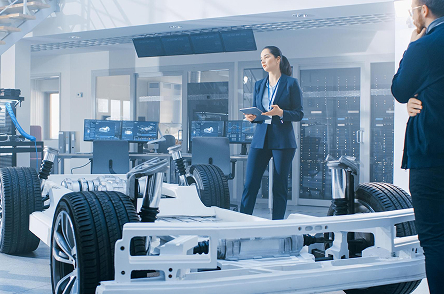
Tata Motors provides another example of India's Industry 4.0 transition. Its Jamshedpur facility has an Industry 4.0-enabled iFactory, developed under the Ministry of Heavy Industries' iFactory Network initiative. The company has also been investing in workforce capabilities around Industry 4.0, smart manufacturing and advanced manufacturing systems.
The Human Skillset Is Changing
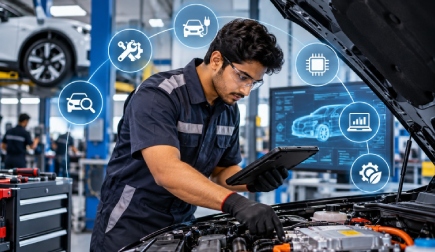
The rise of smart factories does not mean that people become less important. It changes what people need to know. A modern automotive technician increasingly needs a combination of mechanical knowledge and digital capability. Understanding sensors, PLCs, robotics, industrial networks, data interpretation, computer vision and basic AI concepts can become as important as traditional mechanical skills.
This is where industry-led skilling has a critical role. ASDC has identified areas such as IoT, mechatronics, robotics, AI, machine learning, analytics and computational thinking as important parts of the evolving automotive job landscape. The future production line will therefore require technicians who can work alongside intelligent machines, engineers who can interpret manufacturing data and supervisors who can translate AI-generated insights into practical shop-floor decisions.
Building the Factory of the Future
For India, the opportunity goes beyond installing more robots. The real advantage will come from connecting machines, people, processes and data into one intelligent manufacturing ecosystem. AI can help automotive companies improve quality, productivity, uptime, energy efficiency and flexibility. But technology alone will not create a smart factory. The foundation has to include reliable data, robust processes, cybersecurity and, most importantly, a workforce prepared to operate in a digitally connected manufacturing environment.
The smart factory is ultimately not a replacement for human expertise. It is an extension of it. As India's automotive industry moves towards electric vehicles, connected mobility and increasingly complex manufacturing systems, the companies that combine advanced technology with skilled people will shape the next chapter of automotive manufacturing.

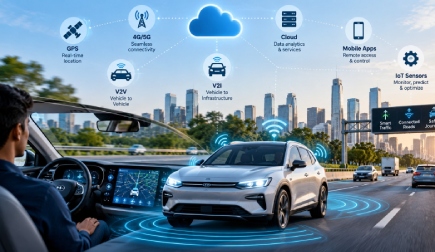
Connected Vehicles Explained: Skills Required to Work in Telematics & IoT
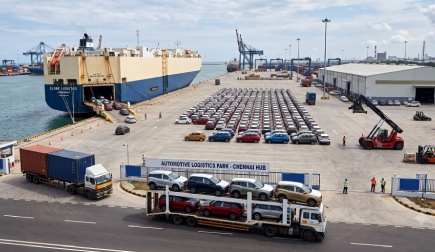
Automotive Logistics & Supply Chain: Skills Driving the Next Phase of Mobility
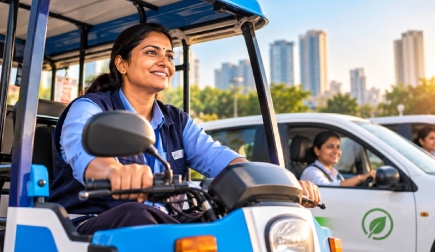
Growing Force of Women in E-Rickshaw and Fleet Services
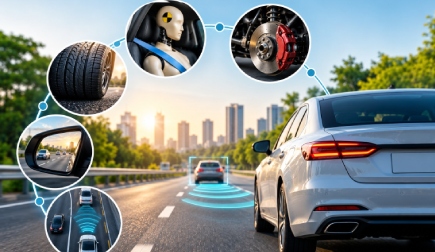
Road Safety Starts with Science: What Every Indian Driver Should Know
AI in Automotive: How Smart Factories Are Changing Production Lines
Skills Needed for Modern Auto Service Technicians
The modern automobile is no longer just a machine that takes people from one place to another. It is increasingly becoming a connected...
A car may be assembled in one factory, but its journey begins much earlier. Thousands of components can come from different suppliers, cities and countries before they reach the production line.
India's mobility sector is witnessing a quiet but powerful transformation. Women are increasingly taking the driver's seat in e-rickshaws...
Every journey on India's roads involves thousands of decisions made in a matter of seconds
The automotive manufacturing floor is undergoing a fundamental shift. For decades, production efficiency...
The role of an auto service technician in India is changing rapidly. A technician who once spent most of the day working on engines...
