




07 Oct 2026
Connected Vehicles Explained: Skills Required to Work in Telematics & IoT
More Links





A car may be assembled in one factory, but its journey begins much earlier. Thousands of components can come from different suppliers, cities and countries before they reach the production line. In today's automotive industry, managing this complex movement is as important as manufacturing the vehicle itself.
Globalisation has made automotive supply chains larger, faster and more interconnected. At the same time, electric vehicles, connected technologies, automation and digital manufacturing are changing what moves through these networks and how it is managed. This transformation is creating a clear need for a new generation of skilled logistics and supply chain professionals.
The traditional logistics role was largely focused on transportation, warehousing, inventory and documentation. These remain fundamental, but today's professionals increasingly need to work with digital tools, analyse operational data and understand automated systems. Real-time tracking, digital inventory platforms, predictive planning and integrated supply chain software are becoming part of everyday operations.
The rise of electric mobility is also changing the skill equation. Batteries, power electronics and other high-value components require specialised handling, storage and transportation practices. Professionals working in automotive logistics need to understand these requirements, along with safety, traceability and quality procedures. Even those who are not directly involved in vehicle manufacturing increasingly need a basic understanding of EV technologies.
This is where industry-led skilling becomes important. Automotive Skills Development Council (ASDC) has an important role in helping align workforce capabilities with the changing requirements of the automotive sector. As job roles evolve, training must evolve with them. Future-ready programmes need to combine technical knowledge with digital skills, workplace safety, quality practices and hands-on exposure to modern logistics operations.
There is also a strong case for making training more closely connected with industry. A learner who understands how inventory is planned, how a warehouse operates, how components are tracked and how a supply disruption affects production is better prepared for the realities of an automotive workplace. Apprenticeships, practical training, industry interaction and exposure to real-world processes can help close this gap.
Another important requirement is the ability to work across functions. Modern supply chains connect procurement, manufacturing, quality, logistics, sales and customers. Communication, coordination, problem-solving and decision-making are therefore becoming essential employability skills alongside technical competencies.
India's ambition to become a stronger global automotive manufacturing and export base will depend not only on infrastructure and investment, but also on the availability of skilled talent. Building this talent requires continuous collaboration between industry, training institutions and organisations such as ASDC.
The automotive supply chain of the future will be digital, connected and increasingly technology-driven. Preparing people for that future today will be critical to keeping India's automotive industry competitive tomorrow.

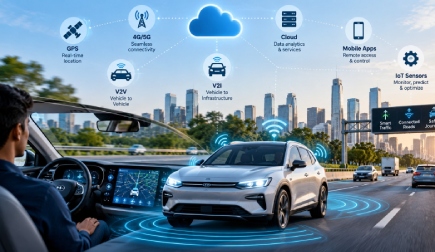
Connected Vehicles Explained: Skills Required to Work in Telematics & IoT
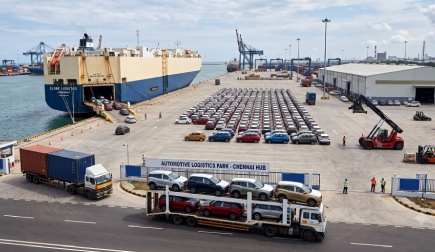
Automotive Logistics & Supply Chain: Skills Driving the Next Phase of Mobility
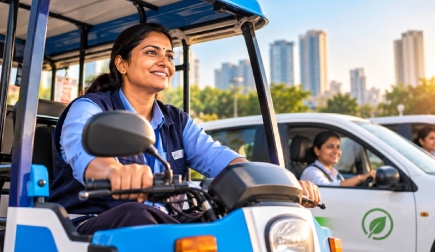
Growing Force of Women in E-Rickshaw and Fleet Services
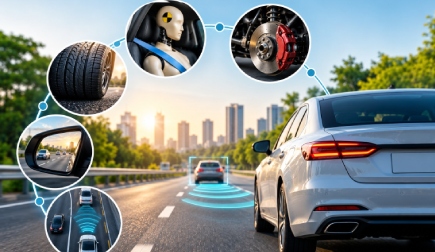
Road Safety Starts with Science: What Every Indian Driver Should Know
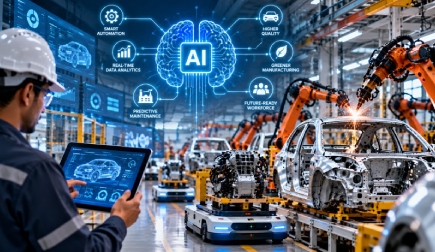
AI in Automotive: How Smart Factories Are Changing Production Lines
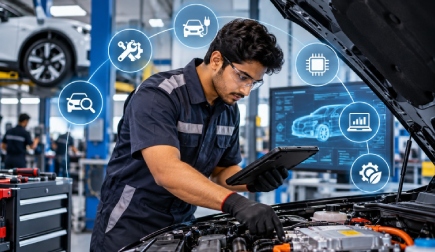
Skills Needed for Modern Auto Service Technicians
The modern automobile is no longer just a machine that takes people from one place to another. It is increasingly becoming a connected...
A car may be assembled in one factory, but its journey begins much earlier. Thousands of components can come from different suppliers, cities and countries before they reach the production line.
India's mobility sector is witnessing a quiet but powerful transformation. Women are increasingly taking the driver's seat in e-rickshaws...
Every journey on India's roads involves thousands of decisions made in a matter of seconds
The automotive manufacturing floor is undergoing a fundamental shift. For decades, production efficiency...
The role of an auto service technician in India is changing rapidly. A technician who once spent most of the day working on engines...
